Sustainable Weight Loss Meals: Cooking on a Real Schedule
By:Author:Koi Yoga Editorial
Updated on:October 28, 2026

- The Myth That One Perfect Meal Plan Fixes Everything
- How Sustainable Weight Loss Meals Actually Hold a Deficit
- What Changes Whether Meals Stay Sustainable
- A Sample Day of Meals Built to Repeat
- Fitting These Meals Around a Week That's Already Full
- When Sustainable Eating Habits Actually Start to Feel Normal
- Mistakes That Quietly Undo a Good Meal Rotation
- Organising Sustainable Weight Loss Meals With Koi Yoga
- Cooking This Week's Meals Without Overhauling Everything
Sustainable weight loss meals are simply meals you can cook again next week without dreading it. The word doing the work is 'again' - not the ingredients, not the macros, just whether the plan survives a second and third round.
That's the mechanism: a deficit only works if you can hold it long enough to matter, and food you actually want to eat is what makes holding it possible. Restrictive plans fail not because the maths is wrong but because nobody repeats a meal they resent.
This guide covers what actually makes meals sustainable, a sample day you can copy, where people usually fall off, and the mistakes that quietly undo a good week of cooking.
The Myth That One Perfect Meal Plan Fixes Everything
There's no single meal, food group or recipe that makes weight come off on its own. No food burns fat, targets an area, or works faster just because it's labelled 'clean' or 'detox'.
The body doesn't choose where it draws energy from, and no plate of food changes that. What actually moves the needle is total intake over time, held consistently enough that the deficit adds up.
So the real answer isn't a magic meal - it's a rotation of meals you don't mind repeating, built around foods you already buy.
How Sustainable Weight Loss Meals Actually Hold a Deficit
Two things decide whether a meal plan lasts: how much friction it adds to your day, and how much it asks you to give up that you actually enjoy.
Repetition Beats Variety
A small rotation of four or five meals you can cook without thinking removes the daily decision that wears people down. Variety sounds appealing but it multiplies the shopping, the planning and the chances you skip cooking altogether.
Portion Control Beats Food Elimination
Cutting an entire food group out usually creates a craving that shows up later as a bigger detour. Adjusting portions while keeping familiar meals on the table tends to hold up longer because nothing feels forbidden.
Put together, those two ideas explain why the same handful of meals, eaten in sensible portions, beats a constantly changing 'ideal' menu.
What Changes Whether Meals Stay Sustainable
Not every factor matters equally. These three carry most of the weight.
The Factors That Matter Most
- Cooking time per meal - if a recipe takes longer than your weekday allows, it gets skipped first, so keep the regulars quick.
- Overlap in ingredients - meals that share a shopping list cut waste and cut the number of decisions you make each week.
- How well it fits your actual appetite - a plan that leaves you hungry by mid-afternoon gets abandoned no matter how well it's balanced.
A Sample Day of Meals Built to Repeat
This isn't a strict script - it's an example of the kind of day that's easy to copy again tomorrow.
| Meal | Idea |
|---|---|
| Breakfast | Oats with fruit and seeds |
| Lunch | Grain bowl with vegetables, protein |
| Snack | Yoghurt or a handful of nuts |
| Dinner | Stir-fry with rice and protein |
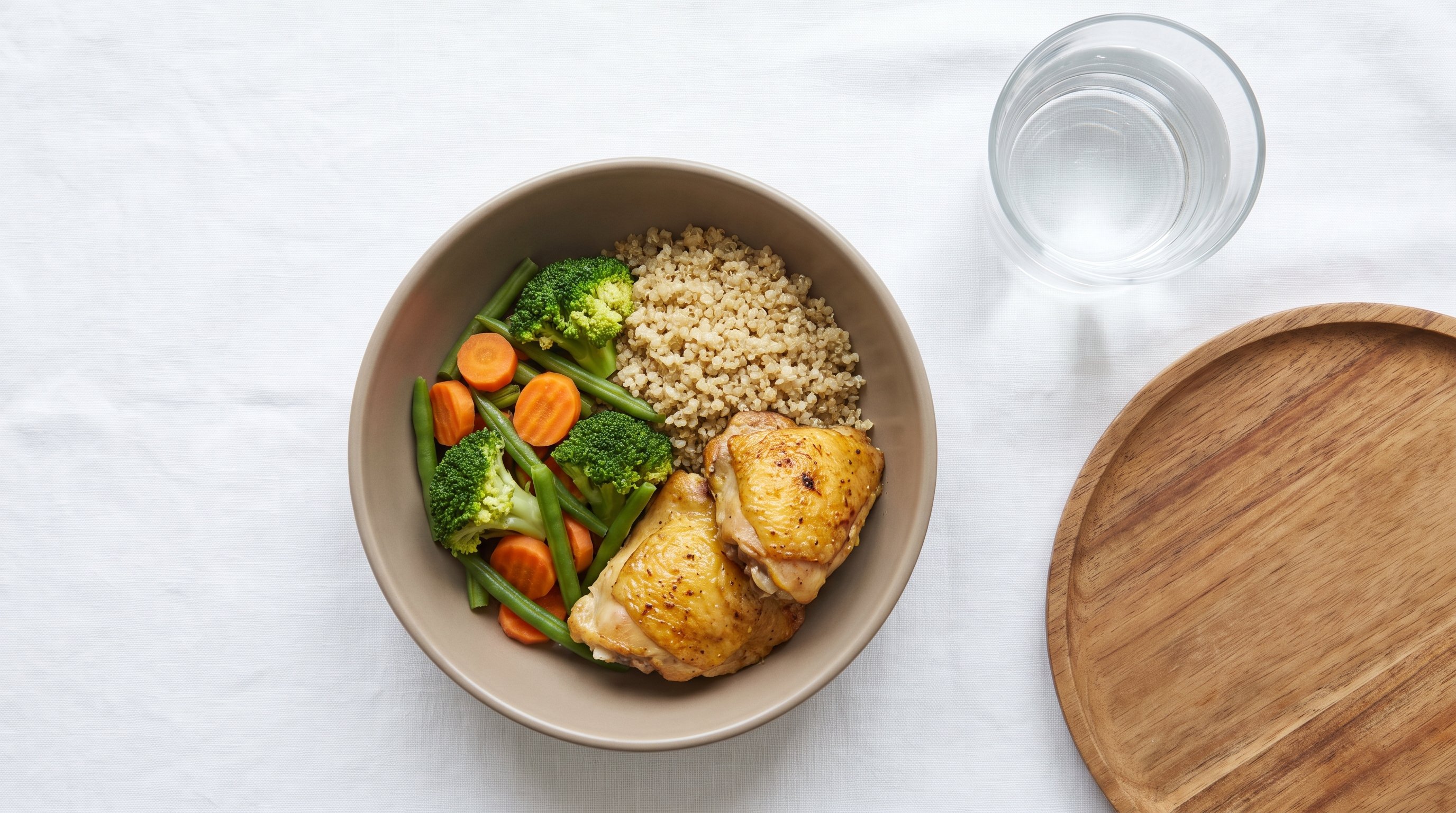
Swap the protein or vegetable depending on what's in the fridge - the structure is what makes it repeatable, not the exact ingredients.
Fitting These Meals Around a Week That's Already Full
Most weeks don't leave room for an hour of cooking every evening, so the rotation above is built to be cooked in batches rather than from scratch each night.
Cook the grains and proteins once or twice a week, then mix and match them into whatever the table above suggests.
A meal plan built around food you already like, paired with a tracker that keeps steps, water and weight in one place, is one way to see whether the week is actually adding up without doing the maths by hand - this is where a tool like Koi Yoga tends to fit, as a layer that organises the plan rather than replacing the cooking itself.
When Sustainable Eating Habits Actually Start to Feel Normal
It's hard to put an exact point on when a meal rotation stops feeling like effort - it depends on the week, the person and how much cooking was already a habit before.
What tends to happen is the shopping list gets shorter because you already know what you're buying, and the decision fatigue around 'what's for dinner' quietly drops off.
That shift - less thinking, not necessarily less effort - is usually the sign the plan has become part of the week rather than a project sitting on top of it.
Mistakes That Quietly Undo a Good Meal Rotation
Planning for a Version of Yourself That Doesn't Exist
Writing a meal plan around the idea of cooking three separate dishes every night sets most weeks up to fail. Plan for the week you actually have, with batch-cooked bases that flex into different meals.
Cutting Portions Too Far, Too Fast
A deficit that leaves you constantly hungry doesn't hold - it just delays the point where you overcorrect later. Smaller, steady adjustments tend to last longer than a dramatic cut.

Treating Every Meal As a New Decision
Deciding from scratch what to cook each day adds up to a lot of small decisions across a week. A short rotation removes most of that load.
Skipping the Shopping List
Without a list built around the rotation, it's easy to buy ingredients for one meal and forget the rest. A shared shopping list across the week's meals cuts down on wasted food and last-minute takeaway.
Organising Sustainable Weight Loss Meals With Koi Yoga
Once the rotation idea makes sense, the next hurdle is usually just keeping track of it across a busy week.
Koi Yoga brings together a tailored meal plan built around food you already enjoy, along with daily habit trackers for water, steps and weight, so the plan stays visible instead of living in a notebook you forget to open.
It also includes nutrition guides and motivating challenges, which can help if the rotation starts to feel stale and you want a nudge to mix it up without starting over.

Lose Weight With Qigong
Burn Fat The Gentle Way
Cooking This Week's Meals Without Overhauling Everything
The simplest way to start is to pick four meals from what's already in your usual rotation and commit to cooking them again next week instead of searching for something new.
Koi Yoga can sit alongside that - a place to keep the plan, the tracking and the week's progress together, so the cooking stays the focus rather than the admin around it.
FAQ
Not necessarily low, just consistent - a meal that leaves portions sensible and repeatable does more over time than one that's technically lower in calories but hard to stick with. Consistency across the week matters more than any single meal's number.
A rotation of four or five meals, with small swaps in protein or vegetables, usually avoids the boredom that comes from eating one meal on repeat. The point is a small set of options, not a single fixed dish.
Batch cooking grains and proteins once or twice a week solves most of the weeknight time problem, since dinner becomes assembly rather than cooking from scratch. A meal plan that's built with that in mind from the start makes this easier to keep up.
Tracking weight, portions and consistency over several weeks gives a clearer picture than judging any single day, since normal daily fluctuation can hide the real trend. Koi Yoga's tracking tools keep that information in one place so the pattern is easier to see.
Share this post