Plant Based Diet For Beginners: A No-Nonsense Starting Guide
By:Author:Koi Yoga Editorial
Updated on:October 28, 2026

- Starting a Plant Based Diet Without Overhauling Everything
- How Many Meals a Week Should Actually Be Plant Based
- Making a Plant Based Diet Work Around a Real Week
- A Four-Week Starter Plan for Going Plant Based
- When Plant Based Eating Starts to Feel Normal
- Mistakes That Derail a New Plant Based Eater
- Easing Into a Plant Based Diet With Koi Yoga
- Putting Your First Plant Based Meal on the Table Tonight
A plant based diet for beginners simply means building most meals around vegetables, fruit, whole grains, beans and nuts, while eating less meat and dairy than before. You don't need to go fully vegan on day one, and nobody is grading you on purity.
The mechanism is straightforward: plant foods tend to carry more fibre and water per calorie, which fills you up on less, and swapping some animal products for plants naturally shifts what's on the plate without demanding a strict rulebook.
This guide covers the first steps to take, how much to change and how often, fitting it around a normal week, a simple starter plan, where people usually stall, and the mistakes worth skipping entirely.
Starting a Plant Based Diet Without Overhauling Everything
Going plant based doesn't have to mean throwing out the fridge. A few deliberate steps make the shift manageable instead of overwhelming.
First Steps Worth Taking
- Pick three meals to convert first - breakfast, lunch or dinner, whichever is easiest to change without disrupting your week.
- Stock a base of staples - beans, lentils, rice, oats, frozen vegetables, so a plant based meal is never more than a cupboard away.
- Swap one animal protein for a plant one at a time - try lentils instead of mince in one dish before changing anything else.
- Keep your favourite flavours - the same spices, sauces and herbs you already cook with work on plant foods too.
- Plan for protein at each meal - beans, tofu, lentils or nuts, so meals don't quietly turn into just carbs and vegetables.
- Expect a learning curve with label reading - some processed foods contain hidden animal ingredients, so check if you're unsure.
- Reassess after a couple of weeks - keep what worked, drop what didn't, and adjust the mix of meals from there.
How Many Meals a Week Should Actually Be Plant Based
There's no single number that works for everyone, but a gradual ramp-up tends to be easier to sustain than switching every meal at once.
A Simple Starting Ratio
Think in terms of meals per week rather than all-or-nothing days, since that makes the change easier to track and adjust.
| Stage | Weekly Meals | What It Looks Like |
|---|---|---|
| Light start | 3 to 5 meals weekly | Swap one meal a day |
| Steady shift | 7 to 10 meals weekly | Most lunches, some dinners |
| Mostly plant based | 14 plus meals weekly | Meat and dairy as sides |
| Fully plant based | All meals weekly | No animal products at all |
Making a Plant Based Diet Work Around a Real Week
Weeknights don't leave much room for complicated cooking, so the swaps that stick are the ones that take no extra time than what you already do.
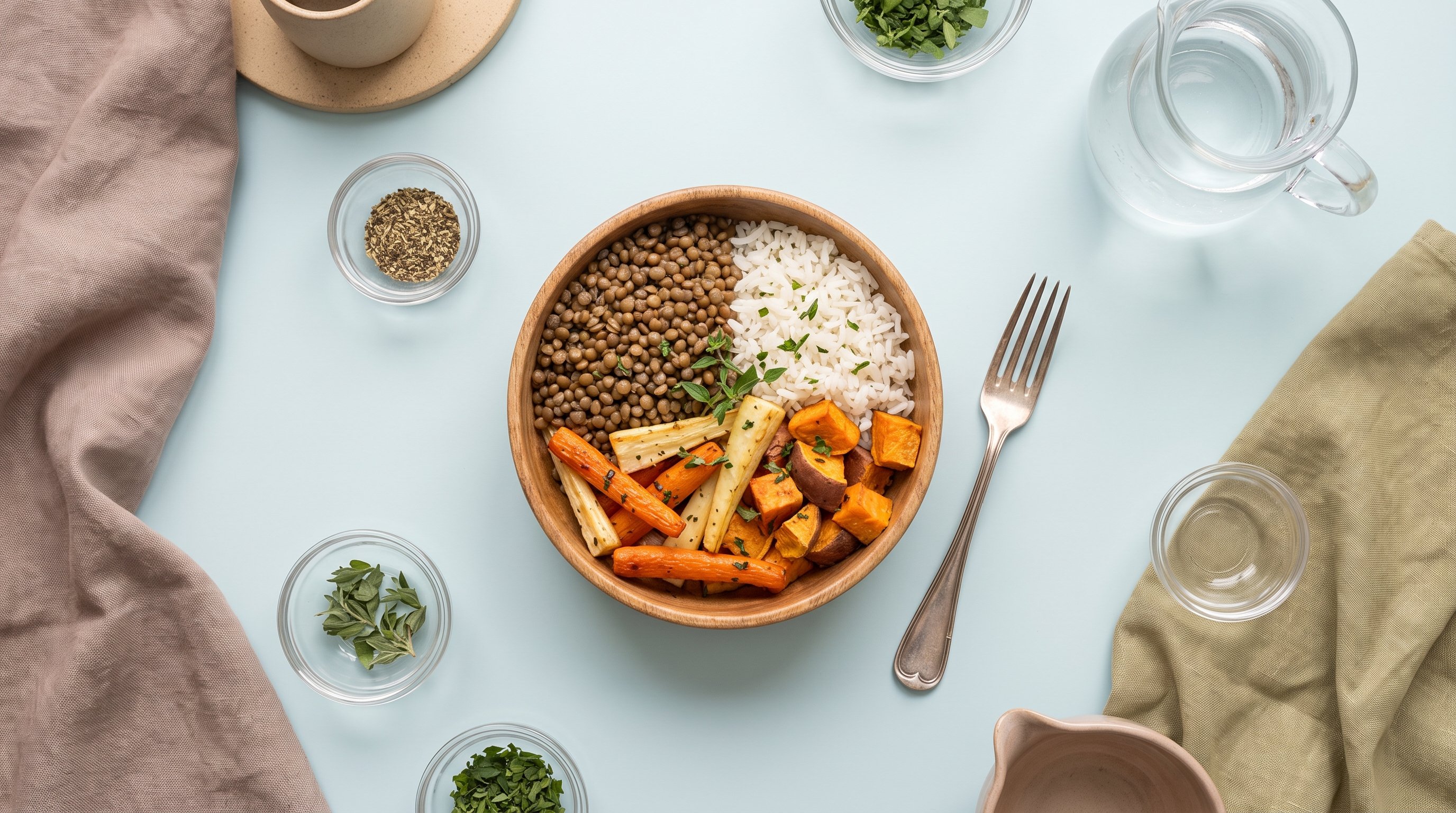
Batch-cooked grains and beans at the start of the week mean a plant based lunch is just an assembly job, not a new recipe every day.
This is where a meal plan built around food you already like helps, since Koi Yoga's tailored meal plans and daily habit trackers keep the shopping list and the cooking simple instead of guessing meal by meal.
Pairing that with a daily habit tracker means you can see which meals you actually kept up with, rather than relying on memory at the end of a busy week.
A Four-Week Starter Plan for Going Plant Based
The order of these changes matters more than hitting a perfect number of meals in week one.
| Stage | What To Do |
|---|---|
| Week 1 | Swap breakfast and one lunch |
| Week 2 | Add a plant based dinner twice |
| Week 3 | Batch cook beans and grains |
| Week 4 | Review and set next month's mix |
When Plant Based Eating Starts to Feel Normal
Early on, plant based meals can feel like a project, since you're reading labels and testing new combinations.
That slows down once a handful of go-to meals become automatic, which tends to happen somewhere after the first few weeks of repeating the same core recipes.
There's no fixed date for this, and some weeks will feel easier than others depending on how much time you have to cook.
The goal isn't to hit a milestone, it's to notice that you're reaching for lentils or tofu without thinking twice about it.
Mistakes That Derail a New Plant Based Eater
Cutting Meat Without Replacing the Protein
Dropping animal protein and not adding beans, lentils or tofu in its place leaves meals thin and unsatisfying. Build the plant protein in first, then let the rest of the plate fill in around it.
Relying on Processed Plant Based Products
Packaged meat substitutes can be convenient, but leaning on them for every meal gets expensive and repetitive fast. Whole foods like beans, lentils and grains do the same job for less cost and less fuss.

Trying to Change Every Meal at Once
Switching breakfast, lunch and dinner in the same week usually leads to decision fatigue and a quiet return to old habits. Changing one meal at a time holds up far better over a full month.
Ignoring What You Actually Enjoy Eating
Forcing down meals you don't like just because they're plant based is a fast route to giving up. Start with plant versions of dishes you already enjoy, then branch out once those feel easy.
Skipping the Planning Step Entirely
Without a rough plan for the week, plant based eating falls apart the moment life gets busy. A simple list of three or four repeatable meals covers most of the week with very little thought.
Easing Into a Plant Based Diet With Koi Yoga
Switching how you eat is easier when it's paired with something that tracks the small stuff for you, rather than leaving every decision to willpower.
Koi Yoga combines tailored meal plans with daily habit trackers and nutrition guides written by nutrition experts, so swapping meals toward plant based options fits into a wider plan instead of becoming a separate project on top of everything else.
The low-impact Qigong sessions and progress tracking for water, steps and weight sit alongside the meal plan, so changes to what you eat and how you move get recorded in the same place.

Lose Weight With Qigong
Burn Fat The Gentle Way
Putting Your First Plant Based Meal on the Table Tonight
Pick one meal tonight and build it around beans, lentils or tofu instead of meat, using whatever sauce or spice you'd normally reach for.
That's the whole starting point, and Koi Yoga's meal plans can take it from there once the first swap feels comfortable.
FAQ
It can support a calorie deficit because plant foods tend to be higher in fibre and water, which fills you up on fewer calories. It's not magic, though, the deficit still has to hold over time for any change to show.
No, plant based for beginners usually means eating more plants and less animal product, not zero animal product. Many people stay at a mostly-plant stage indefinitely and that's a legitimate place to land.
Batch cooking beans, grains and vegetables once or twice a week covers most meals with just reheating and assembly. Koi Yoga's meal plans are built around food you already like, which cuts down on the planning work each week.
Changing every meal at once and running out of easy recipes are the two most common reasons people stop. Keeping a short rotation of three or four meals you genuinely enjoy solves most of that problem.
Share this post