Sustainable Weight Loss Meals: Cooking on a Real Schedule
By:Author:Koi Yoga Editorial
Updated on:September 30, 2026

- Does Sustainable Weight Loss Actually Work?
- Why This Beats the Harder Alternative
- The Quantity Question: How Much, How Many, How Often
- The Practical Question: Making It Work on a Real Schedule
- Comparison: Which Approach Fits Your Life
- The Forbidden Promise, Answered Honestly
- Levers That Change the Result
- How Long Until You See Results?
- Your First Four Weeks
- What Stalls Progress
- Why Koi Yoga Works for This
- Final Thoughts
A meal you can eat 5 days a week beats a meal you can only manage once. That's the whole case for sustainable weight loss meals - not a special food list, just food you'll actually finish making next Tuesday.
The mechanism is simple: a small, repeatable calorie gap held over weeks matters more than a strict plan held for three days then abandoned. Meals built from food you already like are easier to hold than meals built from food you're supposed to like.
This guide covers whether the idea actually works, how much food and how often, a simple comparison of common approaches, and the habits that stall progress before it starts.
Does Sustainable Weight Loss Actually Work?
Weight loss comes down to eating somewhat less energy than the body uses over time. Meals don't need to be strict to do that - they need to be repeatable, because a small gap held for weeks adds up to more than a big gap held for two days.
Here's honest arithmetic: if a stricter plan saves more energy per day but gets abandoned after 4 days, and a milder plan saves less energy per day but gets followed for 25 days, the milder plan wins on total energy saved for the month.
Nothing here promises a number on the scale by a certain date - that depends on too many individual factors to state as fact. What does hold up: consistency multiplies, and a meal you can repeat is a meal that works for you.
Why This Beats the Harder Alternative
Strict diets ask for willpower every single meal, all day, every day. Sustainable meals ask for a decision once - build the plate a certain way - then repeat it without much thought.
Willpower is a limited resource, especially by the end of a long day. A plate template that already includes protein, fibre, and something you enjoy removes the moment where willpower usually fails.
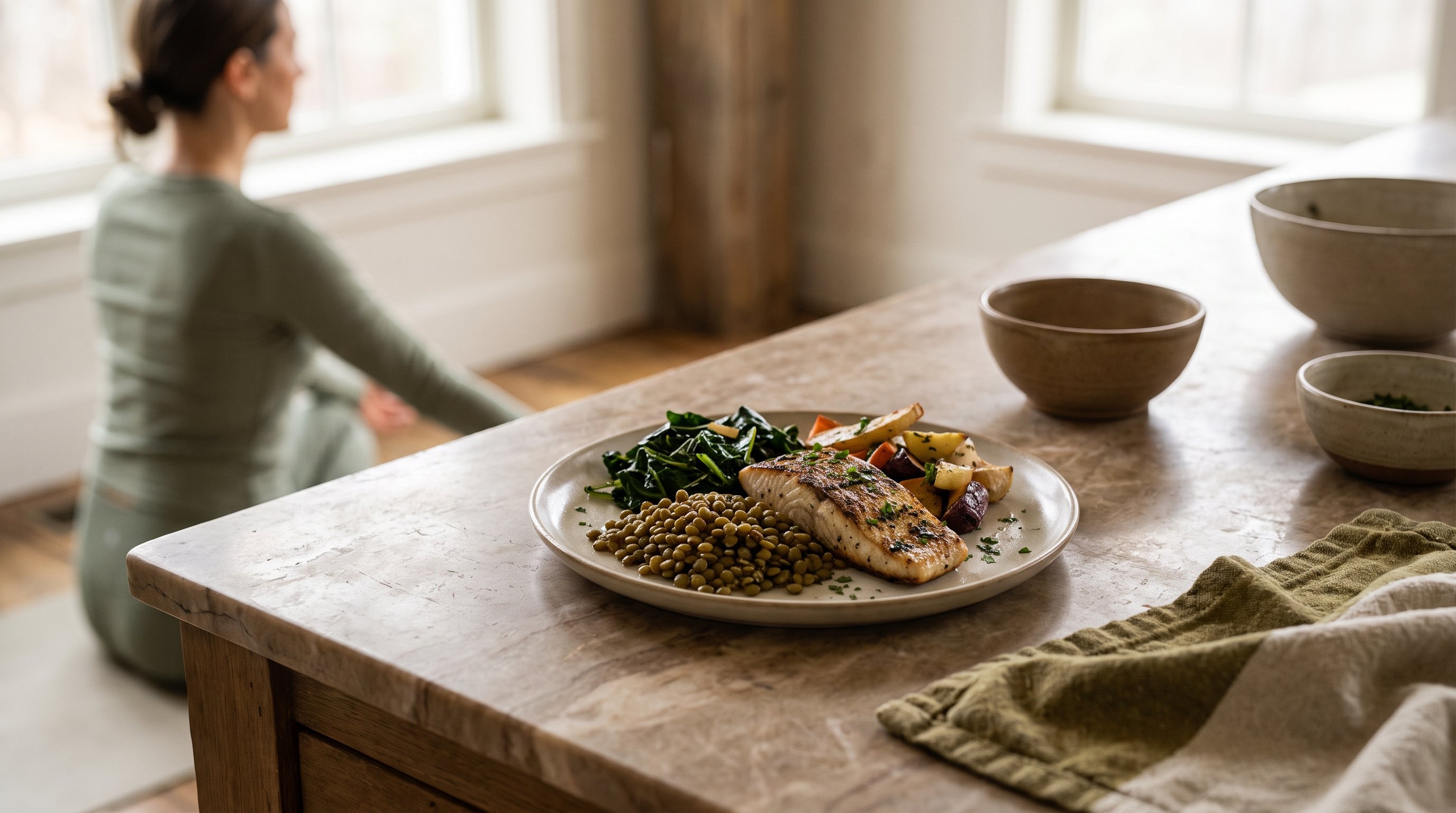
Adherence, not intensity, is the variable that decides most outcomes over months rather than days. A meal plan built around food you already like is easier to hold than one built around food you're supposed to eat.
The Quantity Question: How Much, How Many, How Often
There's no single right number of meals a day - three meals, two meals, or smaller meals more often can all work if the total for the day lands where you need it.
What matters more than meal count is repeatability: can this pattern survive a busy Wednesday and a tired Friday, not just a calm Sunday when you have time to cook.
Find Your Own Number
Start with a plate template - roughly half vegetables, a quarter protein, a quarter whole grains or starch - and adjust portions based on hunger and energy over a week or two, not a single day.
| Your Day | Meal Approach |
|---|---|
Busy weekday | 3 simple repeatable meals |
Slow weekend | Batch-cook for the week ahead |
Low appetite day | 2 larger meals, skip snacking |
High activity day | Add one extra small meal |
The Practical Question: Making It Work on a Real Schedule
The gap between knowing what to eat and actually eating it is where most plans quietly fail. Real life doesn't pause for meal prep, and a plan that assumes an hour in the kitchen every night isn't sustainable for most people.
This is where a tailored meal plan built around food you already like changes the odds - it removes the daily decision fatigue that wears people down. Koi Yoga pairs a meal plan created around your preferences with simple habit trackers, so the eating side and the movement side sit in one place instead of three different apps.
Keeping water, steps, and meals visible in one spot makes it easier to notice patterns before they turn into a stalled week.
Comparison: Which Approach Fits Your Life
Most people are weighing a handful of common approaches to eating for weight loss. None of them is inherently wrong - the right one is the one you'll still be doing in a month.
| Approach | Adherence | Flexibility |
|---|---|---|
Strict elimination diet | Hard to sustain | Very low |
Calorie counting only | Moderate effort daily | High |
Plate template method | Easy to repeat | High |
Meal delivery service | Easy but costly | Low |
Tailored meal plan | Easy to repeat | Moderate to high |
The Forbidden Promise, Answered Honestly
No meal, food combination, or eating window burns fat from one specific area of the body. The body decides where it loses fat from, and no plate arrangement changes that order.
There's also no meal plan that produces results overnight, and nothing here cures, treats, or reverses anything - food supports a calorie gap, that's the mechanism, full stop.
The honest answer is slower and less exciting: consistent meals over consistent weeks, alongside some movement, is what actually shifts the numbers over time.
Levers That Change the Result
Not every part of a meal plan matters equally. These three levers do most of the work, in order of impact.
Levers Worth Your Attention
- Repeatability - a meal you'll actually make again beats a perfect meal you'll make once.
- Protein and fibre at each plate - both help you feel satisfied on fewer total calories, which makes the gap easier to hold.
- Tracking something simple - water, steps, or weight logged consistently helps you notice what's working before a week turns into a stalled month.
How Long Until You See Results?
This is where most people quit - somewhere in the first few weeks, before change is visible, when the plan still feels like effort and not yet like habit.
There's no fixed date to expect a specific result, and anyone promising one isn't being straight with you. What tends to happen first is smaller: meals feel less like a decision, energy steadies out, and the plan starts running on its own momentum rather than daily willpower.
Staying with the pattern past the point where it feels new is the part that actually counts.
Your First Four Weeks
Order matters more here than perfection. This is a sequence to move through, not a strict schedule to nail on day one.

| Week | Focus |
|---|---|
Week 1 | Build one repeatable plate template |
Week 2 | Add protein and fibre to every meal |
Week 3 | Track water, meals and steps daily |
Week 4 | Adjust portions based on hunger patterns |
What Stalls Progress
Copying Someone Else's Meal Plan Exactly
A plan built for someone else's schedule, appetite, and preferences rarely survives contact with your actual week. Adjust portions and food choices to what you'll genuinely repeat.
Treating One Bad Day As a Failed Week
One meal off-plan doesn't undo a week of repeatable habits. The fix is returning to the plate template at the next meal, not waiting for Monday.
No Protein or Fibre at Meals
Meals low in both tend to leave you hungry sooner, which makes the next decision harder. Adding a protein source and a fibre source to each plate steadies appetite through the day.
Skipping Tracking Entirely
Without some record - water, meals, weight - it's hard to tell what's actually working. A simple daily tracker makes patterns visible before they become a stalled month.
Expecting a Fast, Visible Change
Looking for quick proof before the pattern has had time to work is a common reason people quit early. Shifting the focus to whether the meals are repeatable, not whether results are visible yet, keeps the habit alive.
Why Koi Yoga Works for This
Sustainable meals need a system around them, not just a list of ingredients. Koi Yoga pairs a tailored meal plan with daily habit trackers for water, steps, and weight, plus short guided Qigong sessions, so the eating side and the movement side reinforce each other instead of competing for your time.
Motivating challenges and nutrition guides sit alongside the tracker, which gives the plan structure without turning it into a strict diet you'll abandon by Thursday.
Final Thoughts
Sustainable weight loss meals aren't a special category of food - they're the meals you'll actually keep making when the week gets busy. Build around a repeatable plate, add protein and fibre, and track something simple so you can see what's working.
If you want that structure built for you, Koi Yoga puts the meal plan, the tracking, and short daily movement in one place, so the next four weeks look more like a habit and less like a project.
FAQ
There's no fixed number that applies to everyone, since it depends on your starting point, activity, and how consistently you hold the pattern. The honest focus should be on repeatability, not a target figure.
No, cutting out whole food groups tends to make a plan harder to sustain, not more effective. A plate built around portions and balance, rather than elimination, holds up better over months.
Yes, batch-cooking a few repeatable meals on a slower day covers most busy weekdays without daily effort. Koi Yoga's meal plan is built around food you already like, which makes the batch-cook approach easier to stick with.
Most plans fail because they demand more than a real week can give, not because the person lacked discipline. Starting with one repeatable plate template, rather than a full overhaul, tends to survive longer than an all-at-once plan.
Share this post