Qigong for Sleep: Fitting a Wind-Down Into Real Evenings
By:Author:Koi Yoga Editorial
Updated on:October 28, 2026
- What an Evening Qigong Wind-Down Actually Looks Like
- How Much Evening Qigong Practice Actually Helps
- Why Slow Movement Beats Forcing Yourself to Just Lie Down
- Making Qigong for Sleep Work on a Full Evening
- Who Benefits Most From a Qigong Wind-Down Routine
- When a Qigong Wind-Down Starts to Feel Automatic
- Building a Qigong Wind-Down With Koi Yoga's Guided Sessions
- Turning Tonight's Wind-Down Into a Lasting Routine
Qigong for sleep works because it slows the body down before it slows the mind down, using slow movement and steady breathing to shift you out of the wired, switched-on state most evenings leave you in.
The mechanism is simple: slower, deeper breathing signals the body to ease off, and repetitive, low-effort movement gives a busy mind something plain to focus on instead of the day's leftovers.
This article covers what a wind-down routine actually looks like, how much practice is worth doing, why the gentle route beats forcing yourself to just lie down and hope, who it suits, and how to fit it into an evening that's already full.
What an Evening Qigong Wind-Down Actually Looks Like
A wind-down routine does not need to be long or complicated to do its job. Here is one way an evening could be structured, starting an hour or so before you'd like to be asleep.
Sample Evening Sequence
- Screens down, lights dimmed - cutting bright light and notifications gives the next steps somewhere quiet to land
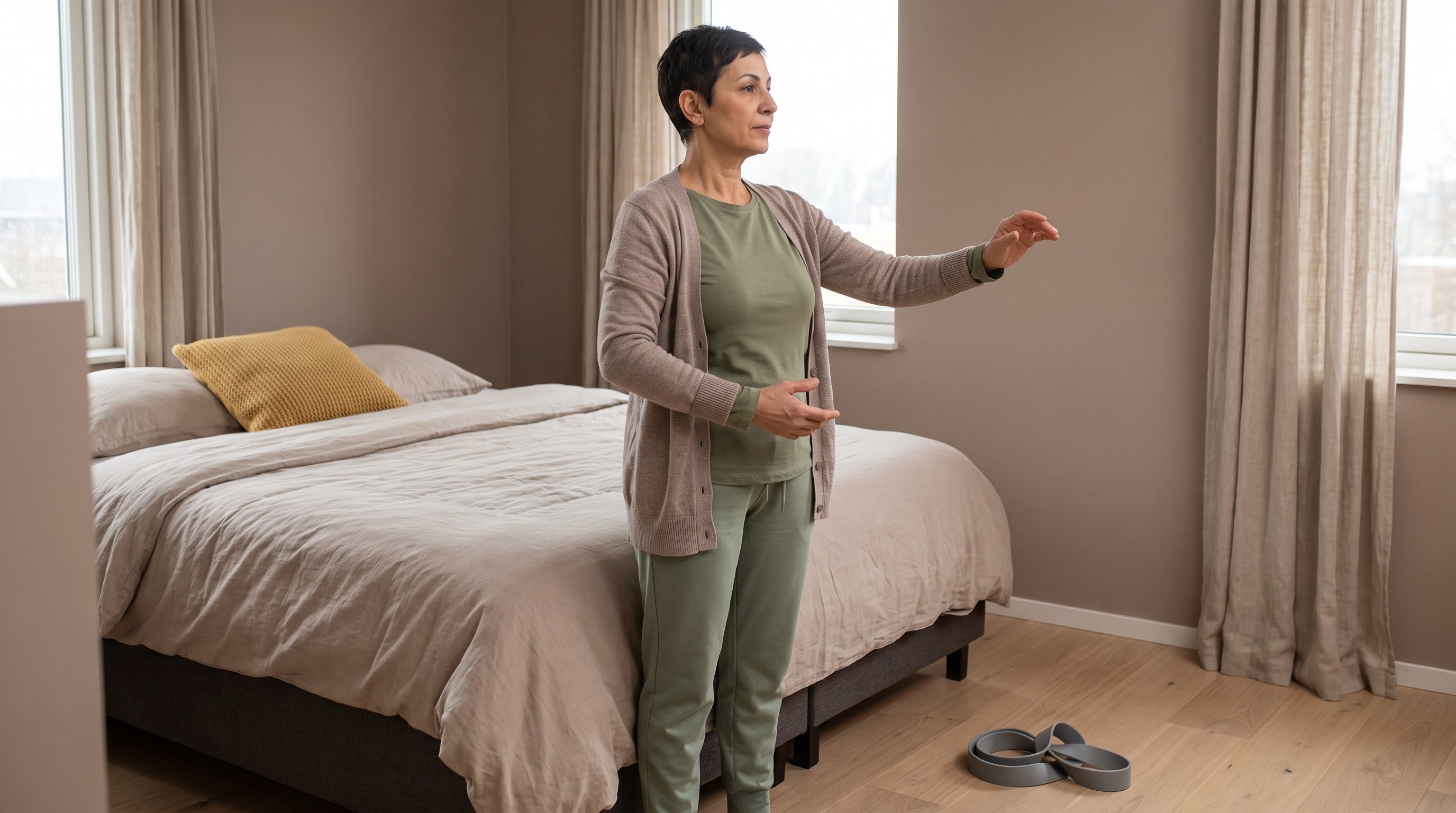
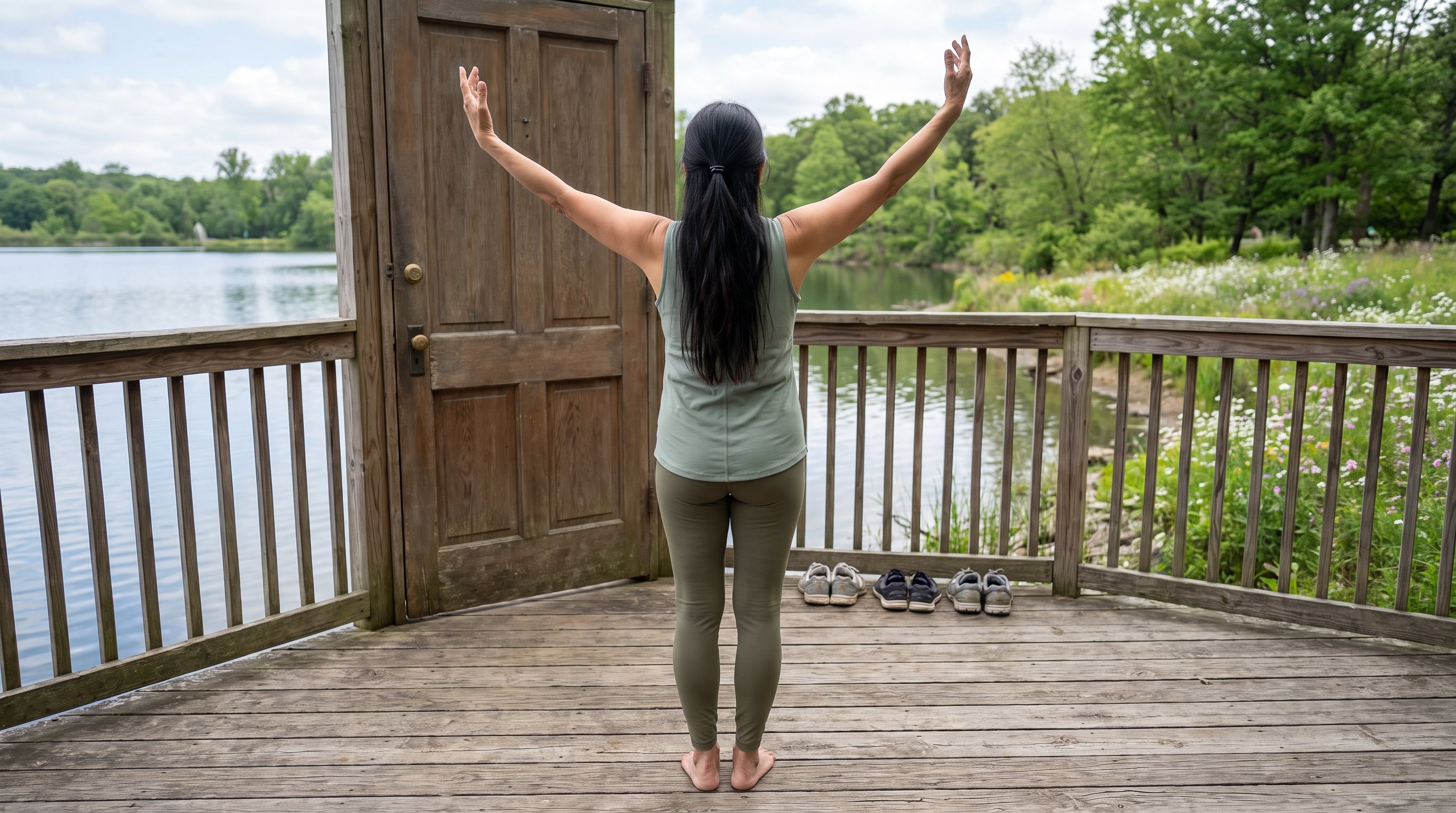
- Five minutes of slow standing movement - gentle arm raises and weight shifts, paced to a slow breath
- Five minutes of seated or standing breathing - long exhales, no forcing, just lengthening the breath out
- A few minutes of stillness - standing or sitting quietly, letting the body settle before bed
- Into bed while still calm - rather than scrolling and then trying to switch off instantly
None of this needs special clothing or space. A clear patch of floor and a few quiet minutes is the whole setup.
How Much Evening Qigong Practice Actually Helps
Finding a Dose That Fits an Evening
There's no single correct length of time, but a short, repeatable session beats an occasional long one because it's the one you'll actually keep doing. The table below gives a few starting points depending on how much evening time you realistically have.
| Time Available | What to Focus On |
|---|---|
| 5 minutes | Breathing only, no standing movement |
| 10 minutes | Short movement sequence plus breathing |
| 15 minutes | Full sequence plus a few minutes of stillness |
| 20 minutes | Slower pace, longer stillness at the end |
Doing five minutes most evenings beats doing twenty minutes once a week. Consistency is what turns this into a cue your body recognises as the start of winding down.
Why Slow Movement Beats Forcing Yourself to Just Lie Down
The harder alternative is familiar to most people: finish the day, climb into bed, and expect the mind to switch off because the lights are now out. It rarely works that way, because a racing mind doesn't slow down just because the body has stopped moving.
Qigong gives you a bridge between an active evening and a still bed, instead of asking you to jump straight from one to the other.
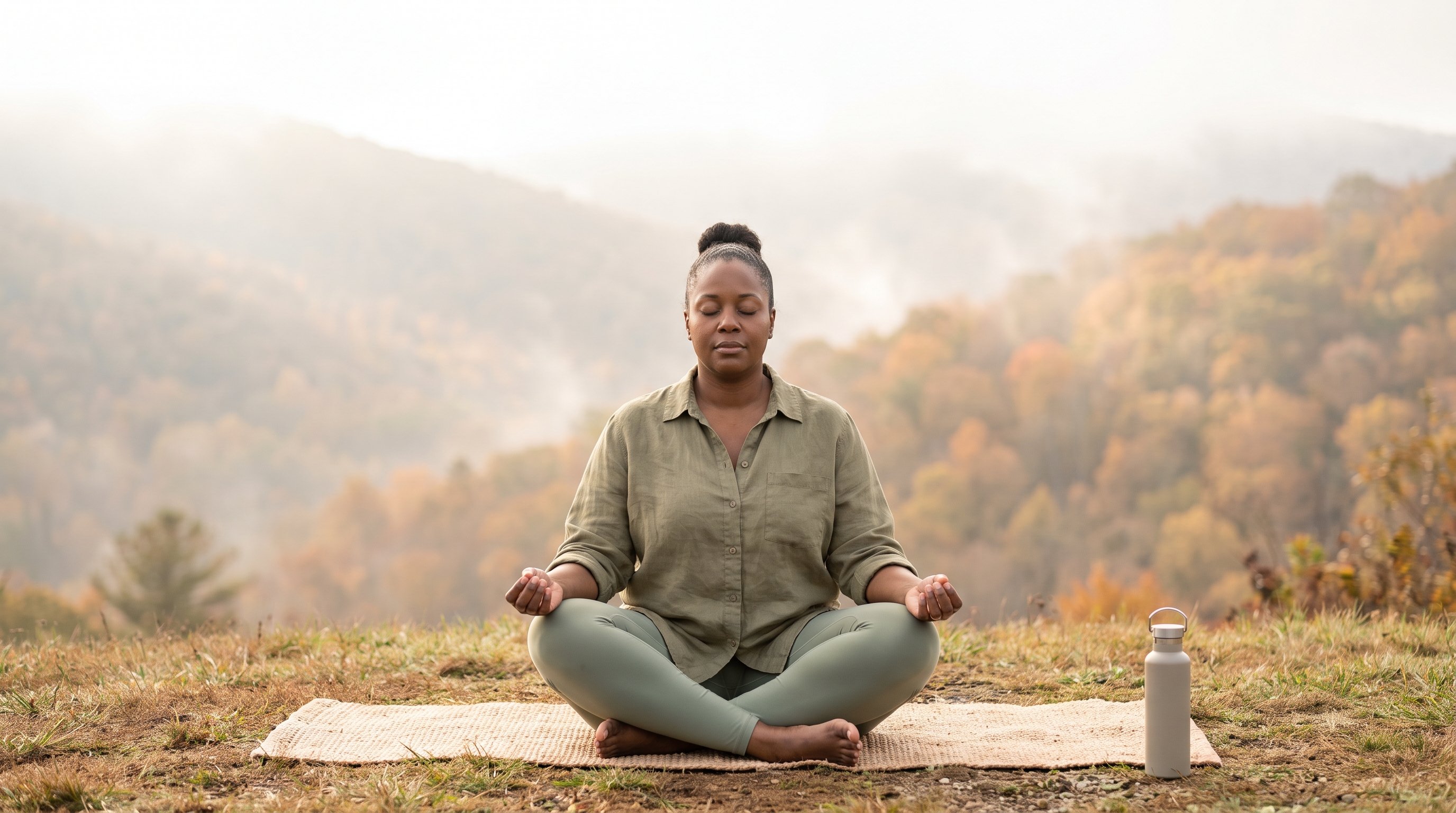
That bridge is also easier to stick with than most relaxation advice, because it's active rather than passive. You're doing something specific with your hands, breath and attention, rather than being told to simply relax, which is hard to action on command.
Adherence is the whole game here. A gentle five-minute habit practised nightly will outperform an ambitious plan you try twice and abandon.
Making Qigong for Sleep Work on a Full Evening
Evenings rarely go to plan. Dinner runs late, someone needs something, or the day simply drags on longer than expected, and a wind-down routine has to survive all of that or it won't survive at all.
The fix is keeping the routine small enough that it fits even on a bad night. Five minutes of breathing and slow movement right before bed still counts, even if the fuller sequence doesn't happen.
This is where a guided structure helps rather than hinders. Koi Yoga offers short, guided sessions you can drop into a packed evening without having to plan the sequence yourself, which matters most on the nights you're least in the mood to think about it.
Who Benefits Most From a Qigong Wind-Down Routine
If You're New to Slow Movement
Start with breathing alone for a few nights before adding any movement. There's no rush to learn a full sequence before you've felt the benefit of the breathing piece on its own.
If Your Evenings Are Packed
Anchor the routine to something that already happens every night, like brushing your teeth, so it has a fixed slot rather than competing for free time. Even two or three minutes attached to an existing habit counts as a real routine.
If You're Older or Have Limited Mobility
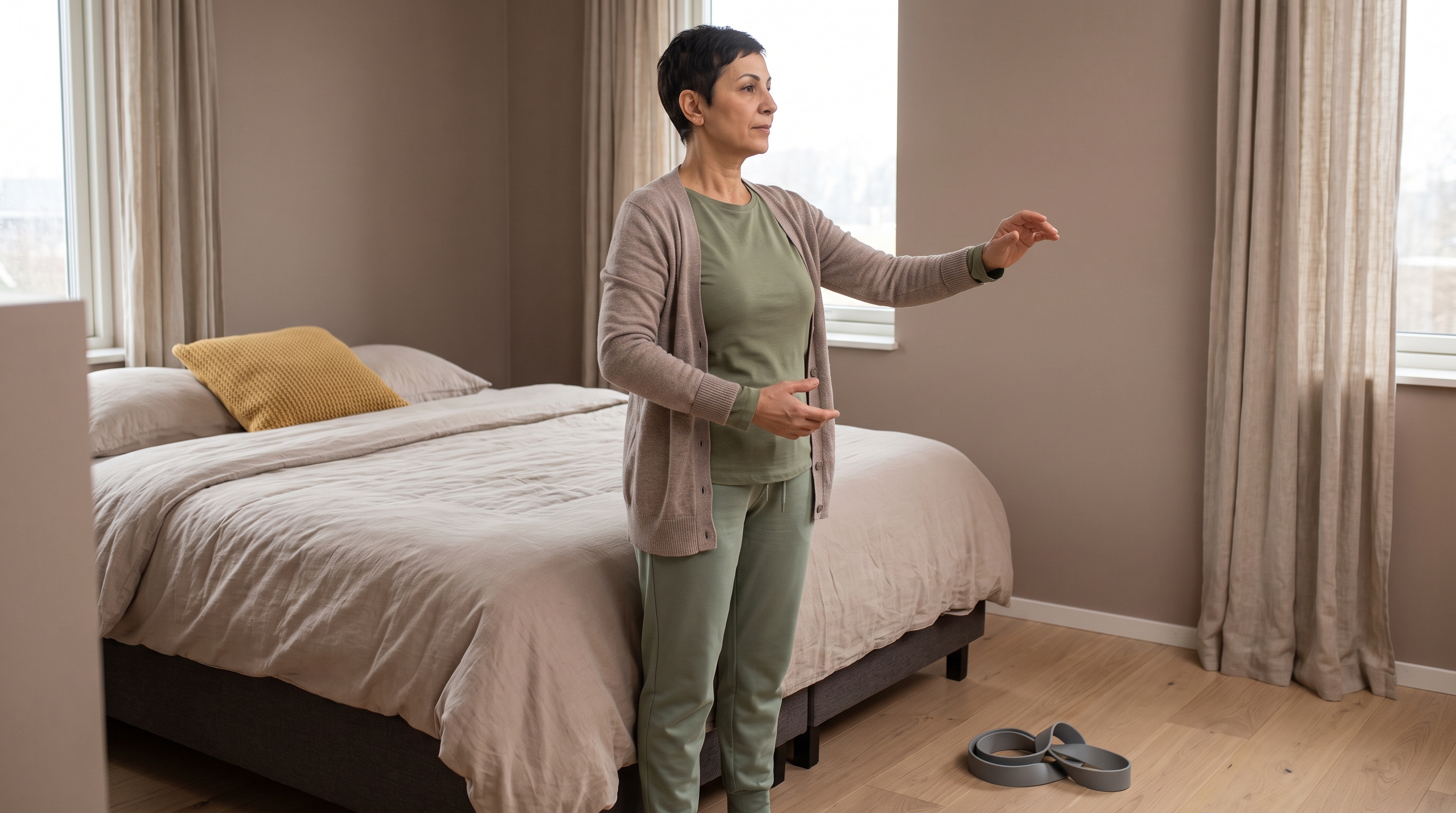
Seated versions of the breathing and gentle arm movements work just as well as standing ones. The point is slow, controlled movement and longer exhales, not a specific posture.
If You Share a Bedroom or Small Space
A seated sequence next to the bed takes up barely any room and doesn't need to disturb anyone else. Quiet breathing work can even happen sitting on the edge of the bed itself.
When a Qigong Wind-Down Starts to Feel Automatic
It's hard to put a fixed timeline on when a wind-down routine starts to feel automatic rather than like an extra task. For some people it clicks quickly, for others it takes longer, and both are normal.
The point most people quit is the first week or two, when the routine still feels like effort rather than habit. Pushing through that stretch with a shorter, easier version of the routine is usually what gets it to stick.
Keep the bar low on the nights that feel hardest. A two-minute version practised is worth more than a fifteen-minute version skipped.
Building a Qigong Wind-Down With Koi Yoga's Guided Sessions
Keeping a wind-down routine going is mostly a logistics problem: knowing what to do, for how long, without having to think it through at the end of a tiring day.
Koi Yoga handles that logistics with hundreds of short, guided sessions you can follow along to, so your evening practice is a tailored plan rather than something you're inventing from scratch each night. It sits alongside daily habit trackers and nutrition guides, so the rest of your routine, not just the wind-down, has a bit of structure behind it too.
Lose Weight With Qigong
Burn Fat The Gentle Way
Turning Tonight's Wind-Down Into a Lasting Routine
A qigong wind-down doesn't need to be perfect or long to be worth doing. Five minutes of slow movement and steady breathing before bed, done most nights, is a routine most people can actually keep.
Pick a time tonight, even a short one, and start there rather than waiting for a quieter week. Koi Yoga's guided sessions can take the guesswork out of what to do once you're ready to begin.
FAQ
It won't act like a switch, but slow movement and longer exhales can make it easier to settle once you're in bed. The effect comes from calming an active nervous system down, not from anything happening while you sleep.
The movements are gentle, but the breathing pattern is doing most of the work, not the stretch itself. Stretching alone without the slower breath tends to miss the calming part of the routine.
A seated breathing routine can happen almost anywhere, including sitting on the edge of the bed with the lights already low. It doesn't need a dedicated room or total silence to be worth doing.
Shrink it rather than drop it, even one or two minutes of breathing keeps the habit alive on a tired night. Koi Yoga's shorter guided sessions are built for exactly those low-effort evenings.
Share this post