Easy Recipes for Weight Loss: Cooking From Scratch Simply
By:Author:Koi Yoga Editorial
Updated on:October 28, 2026
- The Myth of the Fat-Burning Recipe
- How Simple Cooking Actually Supports a Deficit
- What Changes the Result From Easy Recipes
- A Sample Day of Easy From-Scratch Meals
- Fitting Easy Recipes Into a Week That's Already Full
- When Easy Recipes Start to Feel Automatic
- Mistakes That Undo an Easy Recipe Plan
- Pairing Koi Yoga With Easy Recipes for Weight Loss
- Making Scratch Cooking Part of Your Normal Week
Easy recipes for weight loss work because they are easy enough to actually cook on a Tuesday night, not because any single ingredient burns fat. The mechanism is simple: meals built from whole ingredients tend to be lower in calories for the same amount of food, which makes holding a deficit less of a fight.
Scratch cooking also cuts out the hidden sugar and oil that sneak into packaged convenience meals, so portions feel normal instead of restrictive.
This article covers the myth of the miracle recipe, how simple cooking actually supports weight loss, what changes the result, a sample day of meals, common mistakes, and how to fit it all into a week that's already full.
The Myth of the Fat-Burning Recipe
No recipe burns fat, and no recipe burns fat from one specific area of the body. Cutting a particular food or adding a particular spice does not target a stomach, thighs or arms - the body decides where it loses fat from, and nothing in a mixing bowl changes that order.
What a good recipe actually does is make a calorie deficit easier to sit inside without feeling deprived, because it's filling, it tastes good, and it doesn't take an hour to make.
The real answer is less exciting than a miracle food, but it's the one that holds up: simple meals you'll actually repeat beat complicated ones you'll quit after a week.
How Simple Cooking Actually Supports a Deficit
Two things make from-scratch cooking useful for weight loss: portion control and ingredient quality. Both work quietly, in the background, without needing any willpower battle at the table.
You Control What Goes In
When you cook a meal yourself, you decide how much oil, sugar and salt it gets, instead of a packaging label deciding for you. That alone often drops the calorie count of a dish without changing how much food is on the plate.
Whole Ingredients Fill You Up for Less
Vegetables, lean proteins and whole grains take up more room on a plate per calorie than processed convenience food, which tends to mean fuller portions for a smaller calorie total. That makes the deficit feel like less of a cut and more like a swap.
What Changes the Result From Easy Recipes
Not every simple recipe does the same amount of work. Three things decide whether a week of easy cooking actually moves the needle.
The Three Levers That Matter Most
- Protein at every meal - keeps you fuller for longer, so the next meal is easier to keep in check.
- Repeatable meals, not one-off recipes - a short rotation of five or six dishes you can cook without thinking beats a new recipe every night.
- Batch-friendly cooking - a dish that reheats well on day three removes the daily decision of what to eat, which is often where plans fall apart.
A Sample Day of Easy From-Scratch Meals
Here's one way a simple day could look, built entirely from whole ingredients and short cooking times.
A Sample Day of Meals
- Breakfast - oats cooked with water or milk, topped with fruit and a spoon of nut butter.
- Lunch - a grain bowl with rice, roasted vegetables, a lean protein and a simple dressing.
- Dinner - a sheet-pan tray of chicken or tofu with mixed vegetables, seasoned and roasted together.
- Snack - plain yoghurt with berries, or a piece of fruit with a handful of nuts.
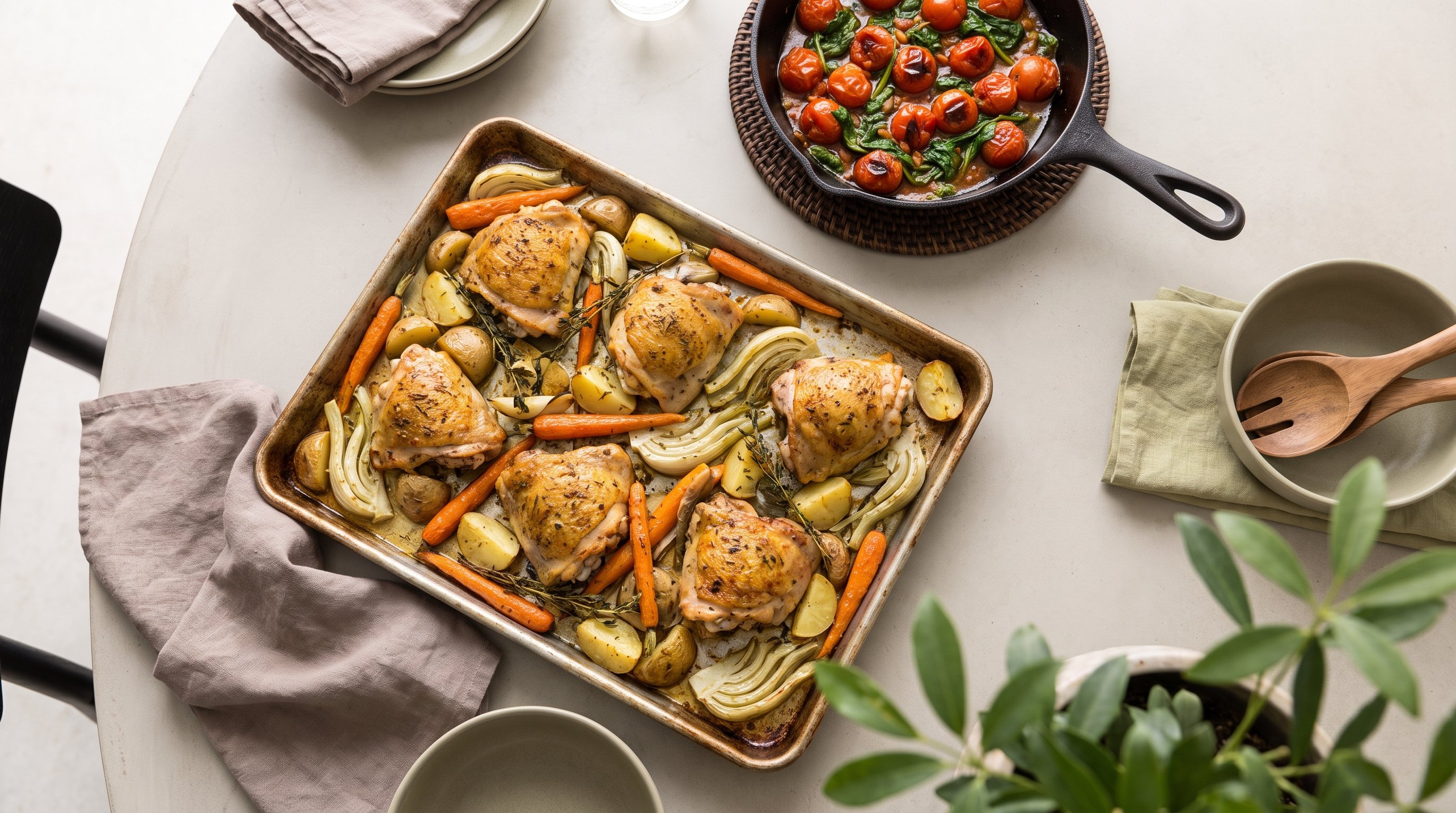
None of these dishes needs a long ingredient list or a special technique, which is the whole point - meals you can repeat without dreading them.
Fitting Easy Recipes Into a Week That's Already Full
The hardest part of easy recipes for weight loss isn't the cooking, it's the deciding - what to buy, what to make, what to eat tomorrow. Cutting that decision-making down is where most people actually lose the plan.
A meal plan built around food you already like removes a lot of that friction, because the deciding is done in advance instead of at 6pm on an empty stomach.
Koi Yoga folds a tailored meal plan in alongside its guided movement sessions, so the eating side and the moving side sit in one place instead of two separate efforts pulling against each other.
When Easy Recipes Start to Feel Automatic
The first couple of weeks of cooking from scratch usually feel like extra effort, because you're learning which five or six meals you actually want to repeat.
Once that short list is settled, shopping gets quicker, cooking gets quicker, and the decision fatigue that usually derails a diet starts to fade.
This is roughly where most people either settle into a rhythm or quit - stick past it, and the meals stop feeling like a project and start feeling like dinner.
Mistakes That Undo an Easy Recipe Plan
Chasing a New Recipe Every Night
Novelty is exhausting and it's not necessary - a short rotation of meals you like is more sustainable than constant variety. Pick five or six dishes and let them do the heavy lifting.
Skipping Protein to Save Time
Meals that lean entirely on carbs tend to leave you hungry again within an hour or two. Keep a protein source in every meal, even if it's just a tin of beans or some eggs.

Treating Oil and Dressings As Free
Olive oil and sauces are easy to pour without measuring, and they add up fast. A rough measure, rather than a free pour, keeps portions honest without turning cooking into a chore.
Not Cooking Enough for Leftovers
Cooking exactly one portion means cooking again tomorrow, which is exactly the decision fatigue that derails a plan. Double the batch and let tomorrow's dinner already be done.
Pairing Koi Yoga With Easy Recipes for Weight Loss
Easy recipes handle the eating side of a deficit, but they work better alongside something that handles the moving and tracking side too.
Koi Yoga pairs an easy-to-follow meal plan with short, guided Qigong sessions and habit trackers for steps, water and weight, so the food choices and the movement choices sit in one place instead of being managed separately.
There's no strict diet to follow and no gym required - just a tailored plan built around what fits your actual week.
Lose Weight With Qigong
Burn Fat The Gentle Way
Making Scratch Cooking Part of Your Normal Week
The simplest place to start is one meal, not the whole day - pick a dinner you already know how to make and cook it from whole ingredients this week instead of from a box.
Koi Yoga can sit alongside that first step, offering a tailored meal plan and progress tracking so the next meal is just as easy to plan as the first.
FAQ
They help by making a calorie deficit easier to hold, since whole-ingredient meals tend to be lower in calories and more filling for the same portion size. No single recipe does the work on its own - consistency across the week is what matters.
It takes longer than opening a packet the first few times, but a short rotation of repeatable meals cuts that time down fast. Batch cooking a double portion also means fewer nights spent cooking at all.
Simple recipes like sheet-pan meals or grain bowls need almost no technique - chop, season, cook on one tray. A tailored meal plan, like the one included with Koi Yoga, can also take the guesswork out of what to cook each day.
Usually it's decision fatigue - choosing a new meal every night gets tiring fast. Settling on a short list of repeatable dishes, and batching them, tends to solve that drop-off point.
Share this post