Detox Recipes: A Practical Guide To What They Actually Do
By:Author:Koi Yoga Editorial
Updated on:October 28, 2026
- The Myth That Detox Recipes Cleanse Your Organs
- How Simple Food Choices Support How You Feel
- What Changes the Result From Detox-Style Meals
- A Sample Day of Detox-Style Meals
- Fitting Detox-Style Eating Into a Normal Week
- When Eating This Way Starts to Feel Normal
- Mistakes That Undercut a Detox-Style Plan
- Building Detox Recipes Into a Koi Yoga Routine
- Where to Start With Your Own Meals This Week
Detox recipes don't flush toxins out of your body - your liver and kidneys already handle that job, every single day, with no help from a juice or a soup needed.
What these recipes actually do is simpler and more useful: they swap out heavily processed food for whole food that's easier to digest, lower in added sugar, and higher in fiber and water.
This guide covers what the term really means, how to build meals that fit the idea without the marketing, what a sample day looks like, and where people usually trip up.
The Myth That Detox Recipes Cleanse Your Organs
No food or drink cleanses your liver, flushes your kidneys, or removes toxins faster than your body does on its own.
Your liver and kidneys filter and process substances constantly, with or without a green juice in the mix - that's just what those organs are built to do.
The real answer is less dramatic but more honest: so-called detox recipes work because they're usually lower in sodium, sugar and processed fat, and higher in fiber and plant food, which can make you feel lighter and less bloated.
That's a food-quality effect, not a cleansing one, and it's worth naming the difference up front.
How Simple Food Choices Support How You Feel
Two separate things are happening when someone eats this way for a few days, and it helps to untangle them.
Less Processed Food, Less Water Retention
Cutting back on heavily salted and processed food can reduce the water your body holds onto, which is often why people feel less puffy within a day or two.
More Fiber and Water, Steadier Digestion
Vegetables, fruit and whole grains bring fiber and water that support regular digestion, which is a big part of why these meals leave people feeling lighter.
Neither of these mechanisms targets fat anywhere on the body - they change how you feel day to day, not where weight comes from.
What Changes the Result From Detox-Style Meals
Not every version of this approach does the same amount of good, and three factors decide most of the difference.
Factors That Matter Most
- Whether whole food replaces processed food - the swap matters more than any single ingredient added in.
- Whether the meals actually keep you full - a thin soup that leaves you hungry an hour later just pushes snacking somewhere else.
- Whether you can keep eating this way past day three - a plan too strict to repeat doesn't do much once it ends.
Get those three right and the rest - which vegetables, which herbs, which bowl - matters far less than people assume.
A Sample Day of Detox-Style Meals
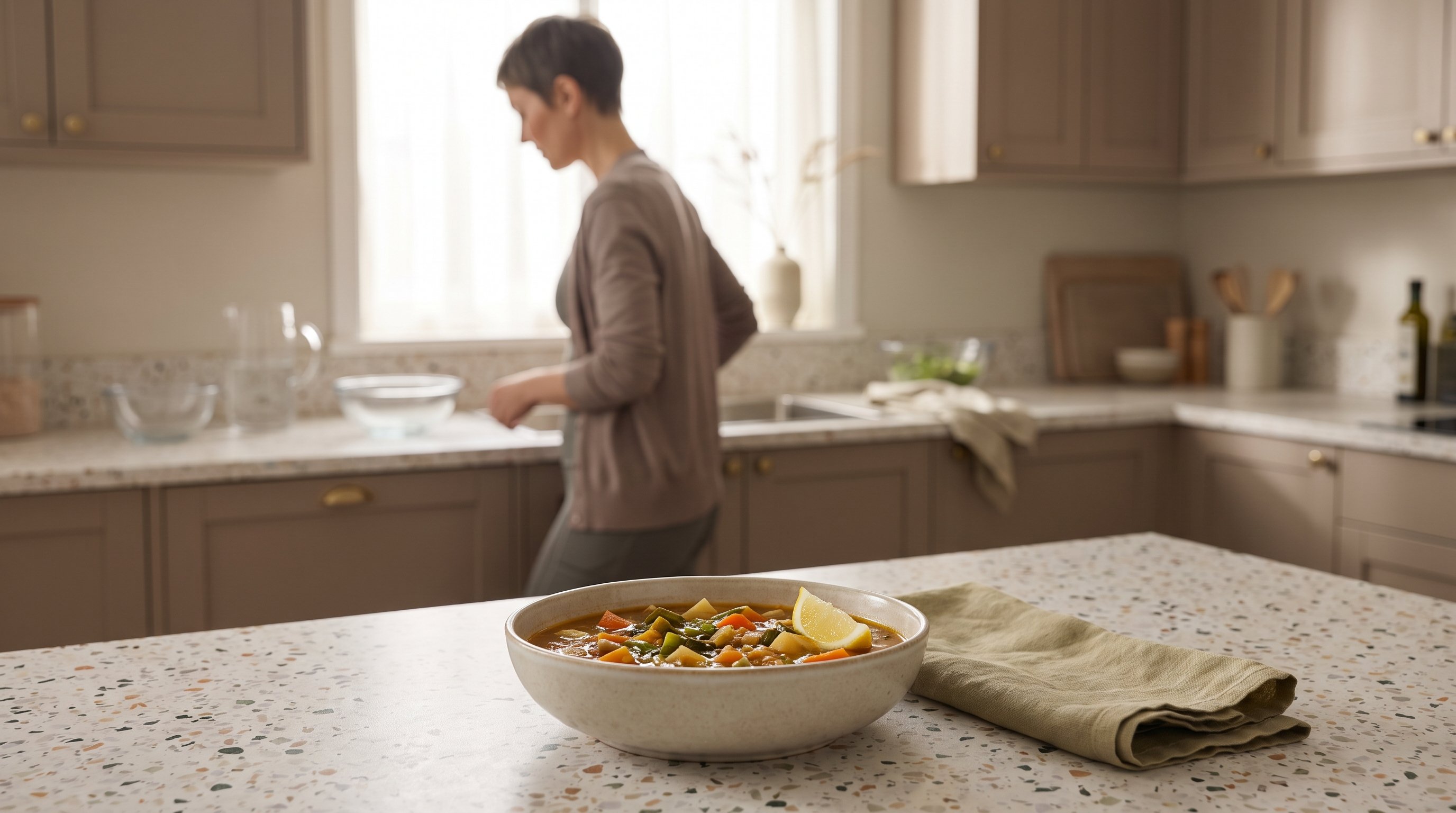
Here's one way a day could look if you're building meals around whole food without cutting out entire food groups.
| Meal | Idea |
|---|---|
| Breakfast | Oats with berries and seeds |
| Lunch | Big salad with beans and olive oil |
| Snack | Cucumber sticks and hummus |
| Dinner | Vegetable soup with whole grain bread |
| Drink | Water with lemon and mint |
Nothing here is exotic or expensive, and that's the point - it's just whole food, prepared simply, eaten at normal portions.
Fitting Detox-Style Eating Into a Normal Week
Most people can't eat this carefully every single meal, and they don't need to.
Picking two or three days a week to lean heavier on vegetables, soups and whole grains is usually more sustainable than an all-or-nothing week that collapses by Thursday.
This is where a tailored meal plan built around food you already like helps - Koi Yoga pairs that kind of plan with daily habit tracking, so water, meals and movement sit in one place instead of three different apps.
The goal isn't perfection, it's a pattern you can repeat without dreading it.
When Eating This Way Starts to Feel Normal
The first few days of swapping processed food for whole food can feel like an adjustment, especially if your usual meals were heavy on salt and sugar.
Cravings for the old pattern tend to ease over time rather than vanish overnight, and that's normal - it's not a sign anything is wrong.
Expect the shift to feel gradual rather than immediate, and judge it by how your energy and digestion feel week to week, not by a single morning on the scale.
Mistakes That Undercut a Detox-Style Plan
Treating It As a Short-Term Fix
A three-day juice reset doesn't change anything once it ends - build habits you can actually keep running instead.
Cutting Calories Too Hard
Soups and juices alone often leave you under-fed, which backfires into overeating later - add protein and whole grains so meals actually hold you.

Skipping Protein Entirely
A plate of only vegetables digests fast and leaves you hungry within the hour - a serving of beans, eggs or fish keeps things steadier.
Expecting a Visible Before-And-After
Feeling less bloated is common; a dramatic physical change is not something any meal pattern can promise - aim for how you feel, not how you look in a mirror.
Buying Expensive Specialty Ingredients
Detox doesn't require powders or imported superfoods - ordinary vegetables, grains and beans do the same job for less money.
Building Detox Recipes Into a Koi Yoga Routine
Eating this way works best alongside daily movement, not instead of it, since the two support how you feel in different ways.
Koi Yoga brings together a tailored meal plan, short guided Qigong sessions, and trackers for water, steps and weight, so whole-food meals and gentle movement sit on the same page instead of being two separate efforts.
That combination is less about any single ingredient and more about making the whole pattern easier to repeat.
Lose Weight With Qigong
Burn Fat The Gentle Way
Where to Start With Your Own Meals This Week
Pick one meal today - lunch or dinner - and build it around vegetables, a protein, and a whole grain instead of whatever's fastest out of a packet.
Repeat that small swap a few times this week before worrying about the rest of your meals, and let the pattern grow from there, with Koi Yoga's meal plan as one way to keep it structured.
FAQ
No - your liver and kidneys already filter and process what your body doesn't need, with or without a specific recipe. What these meals do is reduce processed food and add fiber, which is a different and smaller effect.
A juice-only cleanse usually cuts out protein and fiber, which can leave you hungrier and lower on energy within a day. Whole vegetables and fruit, eaten rather than juiced, tend to hold you better.
Start with one simple swap, like a salad or soup instead of a packaged meal, rather than overhauling every dish at once. A tailored meal plan, like the one inside Koi Yoga, can take the planning part off your hands.
Most people stop because the plan was too restrictive to repeat, not because it failed. Building meals around food you already enjoy, in normal portions, makes it far easier to keep going past the first week.
Share this post