Qigong for Sleep: Fitting a Wind-Down Into Real Evenings
By:Author:Koi Yoga Editorial
Updated on:September 30, 2026
- Does Qigong for Sleep Actually Work?
- Why This Beats the Harder Alternative
- The Quantity Question: How Much, How Often
- The Practical Question: Fitting It Into a Real Evening
- Comparison: Qigong Wind-Down vs Other Evening Habits
- The Forbidden Promise, Answered Honestly
- Levers That Change the Result
- How Long Until You See Results?
- Your First Four Weeks
- What Stalls Progress
- Why Koi Yoga Works for This
- Final Thoughts
Ten minutes of slow qigong movement before bed can shift how quickly your body settles into rest - not through any switch that flips, but through a nervous system that has been given a clear signal to stand down.
The mechanism is simple: slow, controlled breathing paired with gentle movement lowers the body's arousal state, the opposite of the alert, upright posture and shallow breath that keep you scrolling at midnight.
This guide covers whether qigong for sleep actually works, how much you need, what a realistic first month looks like, and where most people stall out before it becomes a habit.
Does Qigong for Sleep Actually Work?
Qigong works on sleep the same way any wind-down routine works: it gives your body a consistent signal that the day is ending.
Slow movement paired with long exhales asks less of your heart rate and your breathing rate than almost anything else you could do in the ten minutes before bed.
Here is the honest arithmetic: if you spend the last ten minutes before bed on a phone, your arousal stays roughly where it was all evening.
Swap those same ten minutes for slow movement and slower breathing, and you are spending that window actively lowering arousal instead of holding it steady or raising it.
That is not a guarantee of a perfect night. It is a shift in which direction the last ten minutes of your day are pulling you.
Why This Beats the Harder Alternative
The harder alternative is a full sleep-hygiene overhaul: new mattress, blackout curtains, cutting caffeine after noon, a fixed bedtime seven days a week.
All of that can help. Almost none of it survives a busy week, because it asks for too many changes at once.
Qigong for sleep asks for one change: ten minutes, same time, same handful of movements.
A routine that small is easy to repeat, and a routine you actually repeat beats a perfect routine you abandon after four days.
Adherence is the whole game here. The plan that survives a bad week is worth more than the plan that only works on a good one.
The Quantity Question: How Much, How Often
Most people do not need long sessions to get a wind-down effect. Five to ten minutes, done most nights, does more for consistency than a rare thirty-minute session.
The frequency matters more than the length. A short routine you do six nights a week beats a long one you do once.
Find Your Own Number
Start with five minutes and notice how you feel getting into bed afterwards; add minutes only if you want more, never because a number told you to.
| Where You Are | Session Length | How Often |
|---|---|---|
New to evening routines | 5 minutes | Nightly |
Building the habit | 8 minutes | 5-6 nights a week |
Already consistent | 10-15 minutes | Nightly |
Any of these three columns is a reasonable place to begin. The point is picking one and repeating it, not finding the perfect number.
The Practical Question: Fitting It Into a Real Evening
The practical barrier is rarely motivation. It is not knowing which movements to do, in what order, without turning bedtime into a research project.
A guided session removes that decision entirely - you follow along, you do not plan.
Koi Yoga's guided qigong sessions are built short by design, so a wind-down routine fits into the same ten minutes you already spend getting ready for bed.
The app also keeps a daily habit tracker, so you can see the routine building night over night rather than trying to remember whether you kept it up.
Comparison: Qigong Wind-Down vs Other Evening Habits
Most evening habits fall somewhere between doing nothing and doing too much. Here is where a short qigong routine sits against the usual options.
| Evening Option | Effort Required | Likely Effect |
|---|---|---|
Scrolling in bed | None | Raises alertness |
Reading | Low | Neutral to calming |
Qigong wind-down | Low | Actively calming |
Full gym session | High | Can raise alertness late |
Strict sleep-hygiene overhaul | Very high | Calming if sustained |
The appeal of qigong here is the second column: low effort, most nights, is the version people actually keep doing.
The Forbidden Promise, Answered Honestly
No routine, qigong included, can promise a perfect night's sleep or fix sleep issues overnight.
The body does not respond to a single evening session the way it responds to a repeated signal over weeks.
There is also no version of movement that targets sleep the way spot reduction claims to target fat - the body does not work in isolated zones like that, for sleep or for anything else.
The real answer is smaller and more useful: a consistent wind-down routine changes the odds in your favour, night after night, rather than delivering one dramatic fix.
Levers That Change the Result
Three things do more to shape how well a qigong wind-down works than the exact movements you choose.
What Actually Moves the Needle
- Timing consistency - doing it at roughly the same point in your evening trains the association faster than doing it perfectly but randomly.
- Breath length - exhales longer than inhales do more of the calming work than the movements themselves.
- Screen cutoff - a bright screen right before or during the routine works against everything the slow movement is trying to do.
How Long Until You See Results?
This is where most people quit - somewhere around the second week, when the routine feels like effort but the payoff still feels uncertain.
There is no fixed timeline where sleep noticeably changes, and anyone promising one is guessing.
What is realistic is this: the first few nights mostly build the habit, not the effect, and the effect tends to show up once the routine stops feeling like a task.
Staying with it through the uncertain middle stretch is the part that actually determines whether it works for you.
Your First Four Weeks
The order below matters more than hitting any specific number - each week builds on the habit from the last one.
| Week | What Changes | The Point Of It |
|---|---|---|
Week 1 | Same 5-minute routine nightly | Build the habit |
Week 2 | Add screen cutoff before session | Reduce late arousal |
Week 3 | Extend to 8-10 minutes | Deepen the wind-down |
Week 4 | Keep routine, track consistency | Make it automatic |
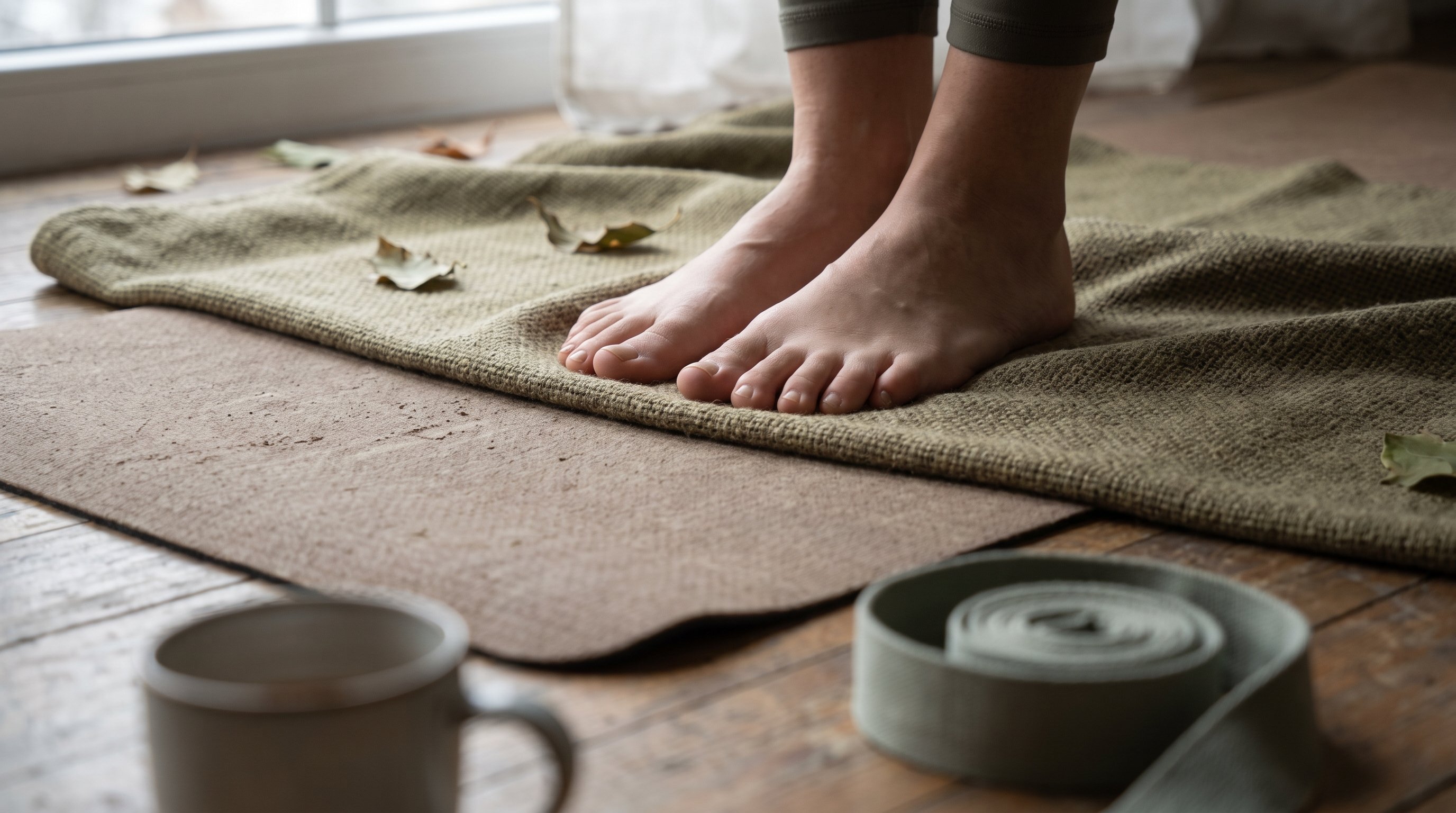
Notice week four does not ask for anything new - it just asks you to keep the routine going long enough for it to stop feeling deliberate.
What Stalls Progress
Doing It Right Before a Bright Screen
Bright light close to the routine works against the calming effect; move the session earlier or dim the room first.
Changing the Time Every Night
An inconsistent time slows down the association your body is trying to build; anchor it to something fixed, like right after brushing your teeth.
Treating It Like a Workout
Pushing pace or intensity defeats the purpose; the slower and more unremarkable it feels, the more it is doing its job.
Quitting in the Uncertain Middle
Weeks two and three are where most people stop, right before the routine becomes automatic; treat those weeks as the point, not the problem.
Expecting One Dramatic Night
Looking for a single night where everything changes sets you up to miss the slower, steadier shift that is actually happening.
Why Koi Yoga Works for This
A wind-down routine only works if it survives contact with a tired, busy evening, which is exactly what Koi Yoga is built around.
Short guided sessions mean no planning, a daily habit tracker means no guessing whether you kept it up, and a tailored plan means the routine fits your evening instead of the other way round.
Final Thoughts
Qigong for sleep is not a fix you feel overnight - it is a small, repeatable signal that tells your body the day is winding down.
Pick a length you can actually keep, protect it from screens, and give it the uncertain middle weeks it needs; a guided plan like Koi Yoga just makes that easier to stick with.
FAQ
The movements themselves cost nothing - all it takes is floor space and a few minutes. Guided apps or plans add a small monthly cost in exchange for structure and reminders.
The slow breathing is doing more work than the stretching - long exhales lower arousal in a way static stretching alone does not aim for. The movement is there to keep the breath paced, not to build flexibility.
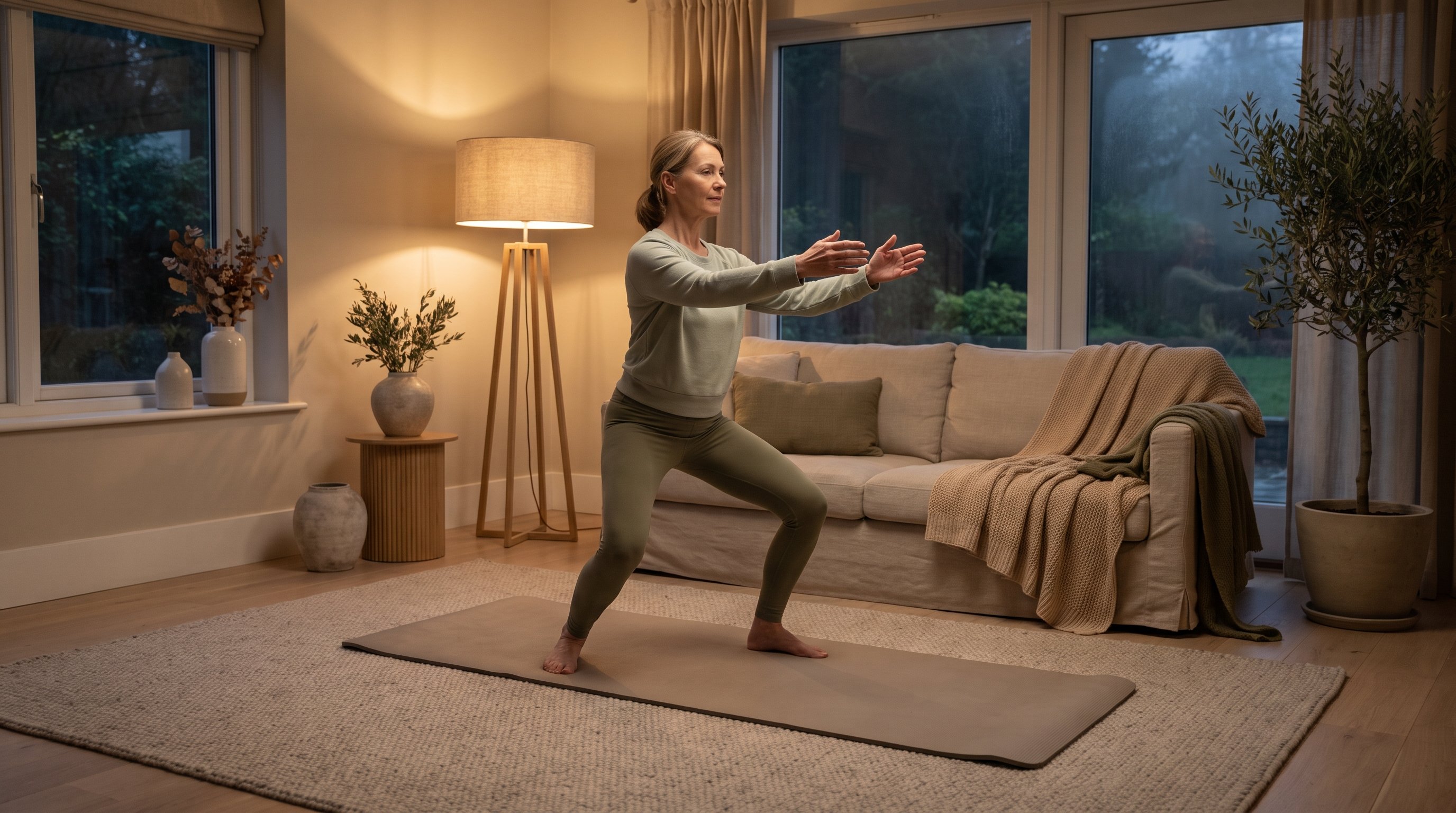
A qigong wind-down only needs enough room to stand and move your arms, so a bedroom corner or hallway works fine. Ten minutes with a closed door beats waiting for a perfectly quiet house that may never happen.
Most people quit in the uncertain middle stretch, once the novelty fades but before the routine feels automatic. Koi Yoga's habit tracker exists for exactly that stretch, so you can see consistency building even on nights it does not feel like progress.
Share this post