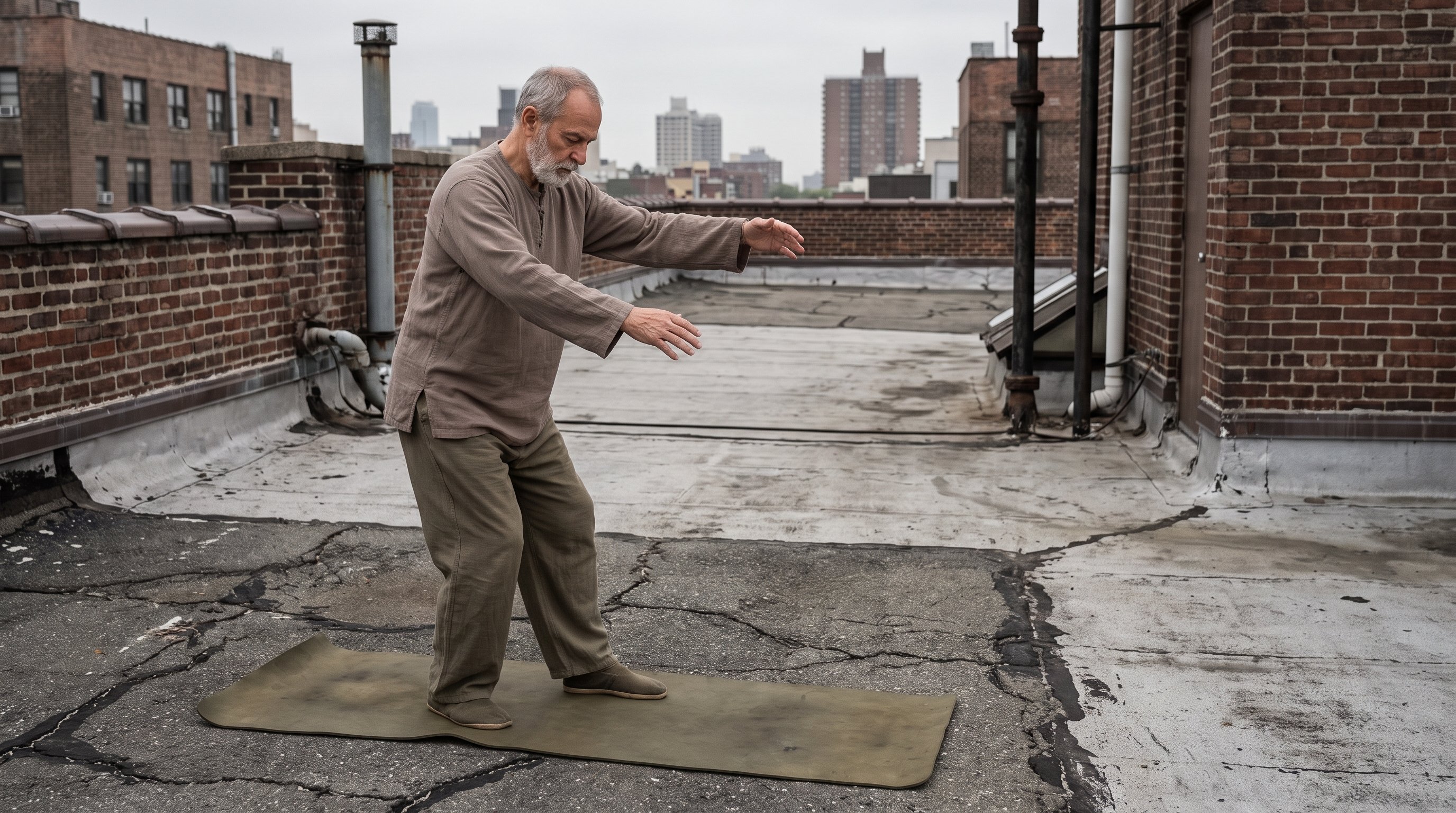
Low Impact Exercises for Weight Loss: Holding the Deficit
By:Author:Koi Yoga Editorial
Updated on:September 30, 2026

- Does Low Impact Exercise for Weight Loss Actually Work?
- Why This Beats the Harder Alternative
- The Quantity Question: How Much Low Impact Exercise Do You Need?
- The Practical Question: How Do You Actually Fit It In?
- Comparison: Low Impact vs High Intensity for Weight Loss
- The Forbidden Promise, Answered Honestly
- Levers That Change the Result
- How Long Until You See Results?
- Your First Four Weeks
- What Stalls Progress
- Why Koi Yoga Works for This
- Final Thoughts
One number matters more than any other in this conversation: the calorie gap you can hold for months, not the one you can only survive for a week.
Low impact exercise works because it lets you move most days without wrecking your joints or your motivation, which means the deficit actually gets held instead of abandoned by day ten.
This guide covers whether low impact training really works, how much you need, what the research-free honest arithmetic looks like, and where most people quietly quit before anything changes.
Does Low Impact Exercise for Weight Loss Actually Work?
Weight loss comes down to energy balance: burn more than you take in over time and stored energy gets used.
Low impact movement - walking, swimming, cycling, Qigong flows - burns real calories, just at a gentler rate per minute than sprinting or heavy lifting.
Do the arithmetic honestly: a 30-minute low impact session most days adds up to roughly 3-4 hours of extra movement a week, which is 3-4 hours your body did not sit still.
Stack that across a month and the total movement time is close to what a harder programme delivers, minus the days lost to injury or burnout.
The honest answer is: yes, it works, because the deficit is created by total weekly movement plus food, not by any single brutal session.
Why This Beats the Harder Alternative
A workout that hurts by day three does not get repeated by day four - that is the entire adherence problem in one sentence.
Low impact sessions are easier to show up for, which means more total sessions completed across a month even if each one burns less than a high-intensity class.
Ten sessions of gentle movement beat three sessions of something so hard you dread it, simply because ten is more than three.

Consistency is unglamorous and it wins anyway - the body does not know or care whether the movement that created it was flashy.
The Quantity Question: How Much Low Impact Exercise Do You Need?
There is no single magic number, but there is a useful starting range: most people do well somewhere between 20 and 45 minutes of low impact movement, most days of the week.
The right amount depends on current fitness, available time, and how recovery feels the next morning.
Find Your Own Number
Start with a duration you could repeat five days running without dreading it, then add five minutes a week only once that feels easy.
| Stage | Session Length | Frequency |
|---|---|---|
Just starting out | 10-15 min | Daily |
Building a habit | 20-30 min | 5-6 days/week |
Steady progress | 30-45 min | 5 days/week |
Established routine | 45+ min | 4-6 days/week |
The Practical Question: How Do You Actually Fit It In?
Knowing the number is one thing - finding the minutes in an actual week with work, family and everything else is the real barrier.
Short guided sessions solve this better than long workout blocks, because five or ten minutes fits into a lunch break or a slow morning without any planning.
Koi Yoga builds its plan around exactly this problem, with short guided Qigong sessions, a tailored meal plan, and habit trackers for steps, water and weight sitting in one place.
That combination means the exercise question and the food question stop being two separate battles fought on two separate fronts.
Comparison: Low Impact vs High Intensity for Weight Loss
The decision most people are actually weighing is not which burns more calories in 30 minutes - it is which one they will still be doing in three months.
| Factor | Low Impact | High Intensity |
|---|---|---|
Joint stress | Minimal | Higher |
Daily repeatability | High | Lower |
Recovery time needed | Short | Longer |
Beginner friendly | Yes | Variable |
Injury setback risk | Lower | Higher |
The Forbidden Promise, Answered Honestly
No exercise, low impact or otherwise, burns fat from one specific area - the body decides where it draws energy from, and no amount of targeted movement overrides that.
So no, low impact sessions will not shrink one body part on schedule, and nothing here promises they will.
The real answer is less exciting but true: consistent movement plus a food pattern you can sustain changes the body as a whole, over time, not overnight and not by area.
Levers That Change the Result
Not every factor carries equal weight - some levers move the outcome far more than others.
What Actually Moves the Needle
- Consistency over intensity - showing up most days beats one hard session followed by four missed ones.
- Food pattern held for weeks - the deficit is built at the table as much as on the mat, so a plan you can actually keep matters more than a strict one.
- Sleep and recovery - under-recovered bodies move less and crave more, which quietly erodes the deficit from both directions.
How Long Until You See Results?
This is where most people quit - the stretch where effort feels steady but the mirror looks the same.
Change from consistent low impact movement tends to show up gradually rather than in a sudden jump, and it often shows up in energy and clothing fit before it shows up on a scale.

Staying with the plan through the quiet weeks is the actual skill being built, more than any single session.
Your First Four Weeks
The order of these weeks matters more than hitting a perfect number in any of them.
| Week | Focus | What To Do |
|---|---|---|
Week 1 | Build the habit | Short daily sessions, no pressure |
Week 2 | Add consistency | Same time each day if possible |
Week 3 | Layer in food | Pair movement with simple meal changes |
Week 4 | Track and adjust | Review steps, water, weight trends |
What Stalls Progress
Starting Too Hard
Going from nothing to 45 minutes daily invites burnout inside a week - start smaller than feels impressive.
Skipping Food Entirely
Exercise alone rarely creates the deficit needed - pair movement with a simple, repeatable meal pattern instead of ignoring food.
All-Or-Nothing Thinking
Missing one day does not erase a week of progress - the fix is showing up the next day, not restarting from zero.
No Way to See Progress
Without tracking steps, water or weight somewhere visible, small wins go unnoticed - a simple tracker keeps motivation anchored in reality.
Treating Rest As Failure
Recovery days are part of the plan, not a break from it - skipping them tends to backfire within a few weeks.
Why Koi Yoga Works for This
Everything above points to the same conclusion: the plan that gets finished beats the plan that looks impressive on paper.
Koi Yoga is built around short, guided Qigong sessions alongside a tailored meal plan and daily habit trackers, so the exercise, the food and the tracking all live in one plan instead of three separate efforts.
Motivating challenges and progress tracking keep the routine visible, which matters most in the weeks where nothing feels like it is changing yet.
Final Thoughts
Low impact exercise for weight loss is not a compromise - it is the version of exercise most people can actually keep doing long enough for it to matter.
Pick a duration you could repeat five days running, pair it with food you can live with, and let a plan like Koi Yoga hold the tracking so the only job left is showing up.
FAQ
Yes - weight loss depends on total energy balance over time, and low impact sessions contribute real calorie burn plus more consistent adherence. The gentler pace often means more total sessions completed, which matters more than the intensity of any single one.
It is easier on the joints, and that is exactly the point - a session you can repeat tomorrow beats one that leaves you too sore to move. Easier to repeat means more total movement across a month, not less.
Ten minutes daily still adds up to over an hour a week, and short guided sessions are built for exactly this kind of schedule. Consistency at ten minutes beats an ambitious plan that only happens twice.
Most quit in the quiet stretch where effort feels steady but nothing visible has shifted yet, often within the first few weeks. Koi Yoga's habit trackers and challenges are built to keep that stretch visible and motivating instead of invisible and discouraging.
Share this post