Qigong For Seniors: A Practical Guide To Getting Started
By:Author:Koi Yoga Editorial
Updated on:October 28, 2026

- Getting Started With Qigong After 60
- How Often Seniors Should Practice Qigong
- Fitting Qigong Into a Slower-Paced Day
- A Starter Qigong Plan for the First Month
- When Qigong Starts Feeling Natural for Seniors
- Common Mistakes Older Beginners Make With Qigong
- Making Qigong for Seniors Easier With Koi Yoga
- Making Qigong a Lasting Part of Later Life
Qigong for seniors works because it meets the body where it already is: slow, low-impact, and built around breath rather than force. There's no jumping, no floor work required, and no need for prior fitness experience to begin.
The practice pairs gentle, repeated movement with steady breathing, which keeps joints moving through a comfortable range without strain. That combination is why it suits people managing stiffness, balance concerns, or simply a slower pace of life.
This guide covers how to start, how often to practice, a simple four-week plan, and the mistakes that trip up most beginners.
Getting Started With Qigong After 60
Starting doesn't need a studio, special clothing, or any equipment. A clear patch of floor and a few minutes are enough.
Steps to Begin Safely
- Pick a stable spot - stand near a wall or sturdy chair in case balance support is needed
- Wear flat, comfortable shoes - or go barefoot on a non-slip surface
- Start with breathing alone - a minute of slow inhales and exhales before adding movement
- Add one simple movement - such as raising the arms slowly while breathing in
- Keep the range small at first - a few centimetres of movement is enough to begin
- Stop before fatigue sets in - a short session done well beats a long one done poorly
- Repeat at the same time each day - this builds the habit faster than relying on motivation
None of these steps require speed or flexibility. The point is to move with control, not to push a range of motion that feels uncomfortable.
How Often Seniors Should Practice Qigong
Short, frequent sessions tend to work better than occasional long ones, since the body adapts through repetition rather than intensity.
A Simple Weekly Guide
The table below gives a rough starting point that can flex around how a day is already shaped.
| Frequency | Duration | Focus |
|---|---|---|
| Daily | 5 to 10 minutes | Breathing plus one movement |
| 4 to 5 times a week | 10 to 15 minutes | Two or three movements |
| 3 times a week | 15 to 20 minutes | A short guided sequence |
| Most days | Whatever feels manageable | Consistency over duration |
There's no single correct number here. What matters more is that the sessions keep happening week after week.
Fitting Qigong Into a Slower-Paced Day
A day doesn't need to be cleared out to make room for this. Qigong fits into the gaps that already exist, like the time spent waiting for a kettle to boil or before sitting down to watch television.
Tying the practice to an existing habit, such as right after breakfast, removes the need to remember it separately.
This is where Koi Yoga can help take the guesswork out of it, with short guided sessions that fit a lifestyle rather than demanding a reshuffle of one. The sessions are built to be easy to follow, so there's no need to plan movements in advance.
A Starter Qigong Plan for the First Month
A four-week structure gives the body time to adjust gradually instead of asking for too much too soon.
| Stage | Focus |
|---|---|
| Week 1 | Breathing and standing posture |
| Week 2 | Add slow arm and shoulder movement |
| Week 3 | Introduce gentle weight shifting between feet |
| Week 4 | Link movements into one short flowing sequence |
The order matters more than the exact timing. Posture and breath come first because everything else builds on them.
When Qigong Starts Feeling Natural for Seniors
The first few sessions can feel a little awkward, and that's normal while the body learns a new pattern of moving and breathing together.
Many people notice the movements start to feel smoother somewhere around the point where the habit has repeated for a few weeks, though this varies a lot from person to person.
The drop-off point tends to happen early, often in the first week or two, before the routine has had a chance to settle in. Getting past that stretch is largely about keeping sessions short enough that skipping never feels like the easier option.
Common Mistakes Older Beginners Make With Qigong
Trying to Copy a Younger Instructor's Range of Motion
Range of motion in Qigong videos varies a lot from person to person, and matching someone else's reach isn't the goal. Move only as far as feels comfortable and controlled.
Skipping the Breathing and Going Straight to Movement
Breath is what links the movements together, so skipping it turns Qigong into generic arm circles. Spend the first minute of every session on breath alone before adding motion.

Practising Standing Up When Balance Is a Concern
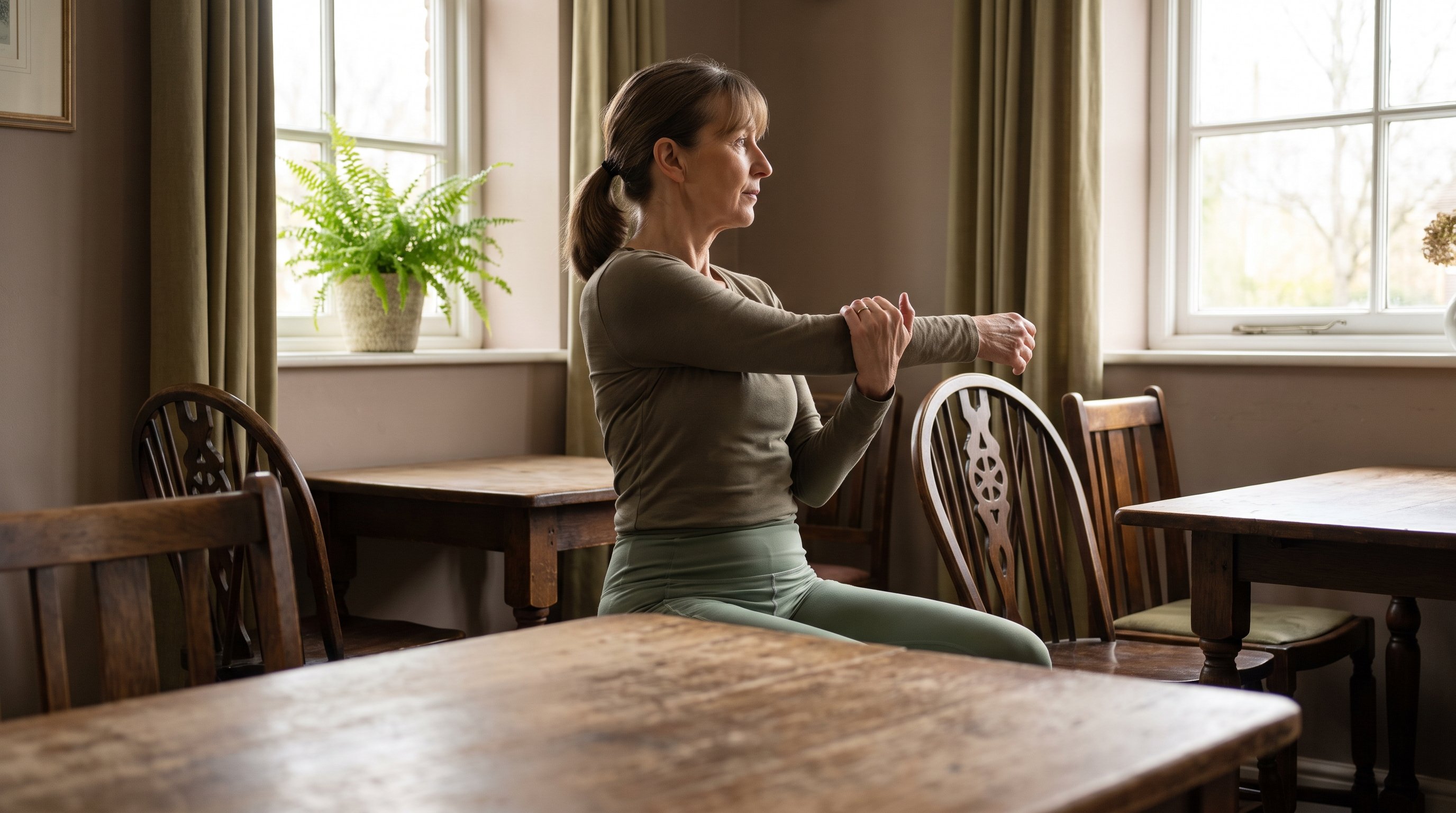
Many movements can be done seated, which removes the balance risk entirely. A chair nearby is a simple adjustment, not a compromise.
Expecting a Long Session to Work Better Than a Short One
A rushed twenty-minute session done once a week teaches the body less than five minutes done daily. Frequency is doing most of the work here, not duration.
Quitting After One Uncomfortable Session
Stiffness in new joints during the first week is common and usually settles as the body adjusts to the new pattern of movement. One difficult session isn't a sign the practice isn't working.
Making Qigong for Seniors Easier With Koi Yoga
Finding the right pace and sequence alone can take a lot of trial and error, especially when starting from scratch.
Koi Yoga removes that guesswork with a tailored plan built around hundreds of short, guided sessions, so each one is easy to follow without needing a gym or strict rules. It also keeps steps, water and progress in one place, alongside a meal plan built around food you already like, so the wellness side of things doesn't need to be figured out separately.

Lose Weight With Qigong
Burn Fat The Gentle Way
Making Qigong a Lasting Part of Later Life
The best way to start is the smallest one: a single minute of breathing, done today, with no pressure to do more tomorrow.
From there, the habit tends to grow on its own terms, and tools like Koi Yoga can help keep the sessions short, guided, and easy to return to on the days that feel harder.
FAQ
Qigong is low-impact and can be adjusted to a seated position, which makes it accessible for most fitness levels. Anyone with a specific health concern should get individual guidance before starting a new movement routine.
Qigong isn't a replacement for every form of movement, since it's gentle by design rather than built for strength or cardio gains. It works well alongside other light activity like walking.
Most Qigong movements can be adapted to a seated position without losing the breathing and arm work that make up the practice. A chair is a practical tool here, not a limitation.
Missing a few days doesn't undo progress, since the habit rebuilds quickly once the routine picks back up. Koi Yoga's short guided sessions make it easy to pick up again without feeling behind.
Share this post