Qigong Exercises: A Practical Guide To Getting Started
By:Author:Koi Yoga Editorial
Updated on:September 30, 2026

- Does It Work?
- Why This Beats the Harder Alternative
- The Quantity Question
- The Practical Question
- Comparison: Choosing How You Move
- The Forbidden Promise, Answered Honestly
- Levers That Change the Result
- How Long Until You See Results?
- Your First Four Weeks
- What Stalls Progress
- Why Koi Yoga Works for This
- Final Thoughts
Ten minutes a day is enough to start. That's the whole pitch - short sessions, done often, done gently.
The mechanism is simple: slow, controlled movement paired with steady breathing asks more of your muscles and focus than it looks like from the outside, and doing it daily builds a habit that survives busy weeks.
This guide covers whether the practice actually works, how much you need, what a first month looks like, and where most people stall out before they see any change.
Does It Work?
The honest answer: it works the way any consistent movement works - by adding activity to days that would otherwise have none, and by making that activity something you'll actually repeat.
Ten minutes of slow, deliberate movement is not nothing. Do it daily and that's roughly 70 minutes a week, which stacks up over a month into meaningful time spent moving instead of sitting.
None of this melts fat off a specific body part, and no session on its own controls what you eat. What it does is give you a low-barrier way to move every day, which is the part most people actually struggle to keep up.
Why This Beats the Harder Alternative
A brutal one-hour gym session sounds more impressive on paper, but only if you actually go.
Compare two weeks: one built on a 60-minute workout you manage twice, one built on a 10-minute session you manage six times.
Twice at 60 minutes is 120 minutes. Six times at 10 minutes is 60 minutes - less total time, but it happened, and it happened on a schedule you can repeat next week too.
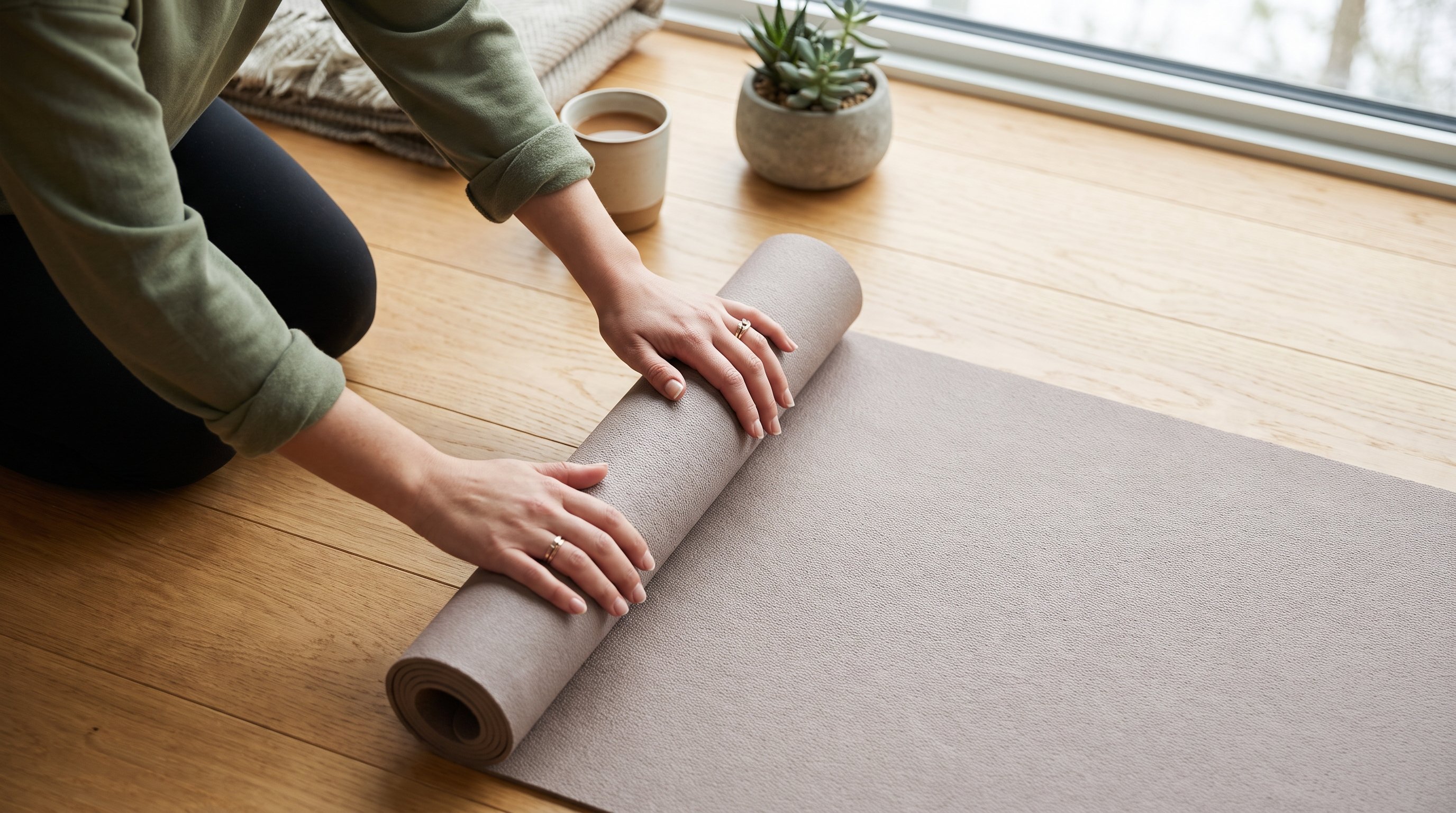
Adherence is the whole game. A smaller session you finish beats a bigger one you skip, every single week that this pattern repeats.
The Quantity Question
There's no single correct number of minutes, but there is a range that tends to be sustainable: somewhere between five and twenty minutes, most days of the week.
Less than five and it's easy to skip entirely because it doesn't feel worth setting aside time for. More than twenty and it starts competing with the rest of your day, which is exactly what causes people to quit.
Find Your Own Number
Start with whatever you can repeat without negotiating with yourself each morning - that's your real number, not the one that sounds most ambitious.
| Where You Are | Session Length | How Often |
|---|---|---|
Just starting out | 5 minutes | Daily |
Building a habit | 10 minutes | 5-6 days |
Established routine | 15-20 minutes | Daily |
Low-energy days | 3-5 minutes | As needed |
The Practical Question
Knowing the ideal minutes doesn't help much if you don't know what to actually do once the timer starts.
This is where most people get stuck - not lack of motivation, but lack of a simple session to follow without having to plan it themselves.
Koi Yoga solves that gap with hundreds of short, guided sessions built into a plan tailored to your fitness level, so you open the app and move instead of figuring out what to do.
Daily habit trackers and progress tools sit alongside the sessions, keeping steps, water and weight in one place so you can see the pattern building instead of guessing at it.
Comparison: Choosing How You Move
Most people weighing up a gentle movement practice are really deciding between a few different options, each with a different cost in time and effort.
| Option | Time Needed | Equipment | Barrier To Start |
|---|---|---|---|
Gentle daily practice | 5-15 min | None | Low |
Gym strength training | 45-60 min | Gym access | High |
Running program | 20-40 min | Shoes, space | Medium |
Home HIIT videos | 20-30 min | Floor space | Medium |
Walking routine | 20-30 min | None | Low |
The Forbidden Promise, Answered Honestly
No session, gentle or intense, can target fat loss from one area of your body - not your stomach, not your arms, nowhere.
The body decides where it loses weight from, and it doesn't take requests. Anyone promising otherwise is selling something that doesn't match how bodies actually work.
There's also no version of this that works overnight, and nothing here cures or reverses anything. What actually happens, slowly, is that daily movement and steadier eating habits add up across weeks - and that's a real result, just not an instant one.
Levers That Change the Result
Three things matter more than the exact style of movement you choose.
What Actually Moves the Needle
- Consistency over intensity - showing up most days at a manageable effort beats one hard session followed by a week off.
- What's on your plate - a meal plan built around food you already like makes it far easier to hold a modest deficit without feeling deprived.
- Sleep and stress habits - poor sleep and constant stress make every other effort harder to sustain, so protecting both is worth as much as the movement itself.
How Long Until You See Results?
This is where most people quit - not because it isn't working, but because they expected to feel a difference sooner than the body actually delivers one.
Early weeks are about the habit sticking, not the mirror changing. Energy and consistency tend to shift before appearance does, and that order is normal, not a sign of failure.
Give it enough weeks that skipping a day feels unusual rather than expected - that's the marker worth watching, more than any specific date on a calendar.
Your First Four Weeks
The order of what you focus on matters more than hitting any particular number early on.

| Week | Main Focus |
|---|---|
Week 1 | Show up daily, keep it short |
Week 2 | Add water and step tracking |
Week 3 | Tidy up one meal a day |
Week 4 | Extend sessions slightly if ready |
What Stalls Progress
Starting Too Big
A 30-minute daily goal sounds ambitious but rarely survives a busy week - drop it to something you'll actually finish, then build up from there.
Skipping One Day and Calling It Failure
One missed day is just one missed day, not the end of the habit - the fix is simply doing tomorrow's session, not restarting from scratch.
Ignoring Food Entirely
Movement alone can't outpace a diet that works against you - a simple meal plan that fits food you already enjoy closes that gap without feeling like a punishment.
Not Tracking Anything
Without some record of steps, water or weight, it's hard to notice the slow wins - a simple tracker turns invisible progress into something you can actually see.
Expecting a Straight Line
Weight and energy don't move in a neat downward slope - some weeks plateau, and that's normal, not a sign the plan has stopped working.
Why Koi Yoga Works for This
Everything above points to the same conclusion: the plan that gets finished beats the plan that gets abandoned.
Koi Yoga is built around that idea - a tailored plan of short, guided sessions, a meal plan that doesn't ask you to give up food you like, and daily trackers plus challenges that keep the habit visible instead of forgotten.
Final Thoughts
None of this requires a gym, a strict diet, or an hour you don't have - it requires a short daily session you'll actually repeat and a plate that doesn't fight you.
Pick a number of minutes you can hold for a month, pair it with one small food change, and let Koi Yoga handle the rest of the structure so you don't have to plan it alone.
FAQ
It can contribute by adding consistent activity and supporting steadier habits around food and sleep, but no single movement style loses weight on its own. The result comes from stacking small consistent choices, not from any one session.
Slow and controlled movement still asks something of your muscles and focus, and daily repetition adds up to real weekly minutes over time. A session you actually finish every day outweighs a harder one you keep skipping.
Start smaller - even three to five minutes counts as movement and keeps the habit alive on a busy day. Koi Yoga's shorter guided sessions are built for exactly this kind of day, so there's no all-or-nothing pressure.
Most people expect visible change faster than the body delivers it, then quit right before the habit would have paid off. Tracking small wins like consistency and energy, rather than only the mirror, helps carry you through that early stretch.
Share this post