Does Qigong Help Lose Weight? What to Realistically Expect
By:Author:Koi Yoga Editorial
Updated on:October 28, 2026
- Getting Started With Qigong for Weight Loss
- How Much Qigong Actually Moves the Needle
- Fitting Qigong Around a Full Day
- A Starter Qigong Plan for Your First Month
- When Qigong Starts to Feel Worth It
- Where New Qigong Habits Go Wrong
- Making Qigong for Weight Loss Easier to Sustain
- Your Next Qigong Session Starts Today
Qigong can support weight loss, but not by burning fat directly. It helps because it moves your body daily, lowers stress that drives overeating, and makes a calorie deficit easier to hold without feeling like punishment.
The mechanism is simple: slow, breath-led movement burns some energy, keeps joints and muscles active, and builds the kind of consistency that harder workouts often fail to produce. Weight loss still comes down to energy balance over time, and Qigong's real job is making that balance easier to maintain.
This guide covers how to start, how much practice actually matters, what a first month might look like, where people tend to quit, and the mistakes worth avoiding from day one.
Getting Started With Qigong for Weight Loss
You don't need special equipment or a background in martial arts to begin. A clear starting sequence removes the guesswork that stops most people before they get going.
Steps to Begin
- Pick a flat, quiet space - a few square metres indoors or outdoors is plenty
- Choose one short guided session - ten to fifteen minutes is enough to start
- Focus on the breath first - let the movement follow the exhale rather than rushing it
- Practice at the same time each day - anchoring it to an existing habit makes it stick
- Track how you feel afterwards - energy and mood shifts matter as much as the clock
- Add a second short session once week one feels easy - build up rather than starting big
- Pair it with an eating pattern you can actually hold - movement alone won't carry a deficit on its own
How Much Qigong Actually Moves the Needle
There's no single magic number, but consistency matters more than intensity here.
Finding a Rhythm That Lasts
Short daily sessions tend to beat one long weekly practice because they keep the habit alive and the deficit steady. The table below is a starting reference, not a rule.
| Goal | Frequency | Session Length |
|---|---|---|
| Build the habit | Daily | 10-15 minutes |
| Support a deficit | 5-6 days a week | 15-20 minutes |
| Add variety | 2-3 days a week | 20-30 minutes |
| Maintain long term | 3-4 days a week | 10-20 minutes |
Fitting Qigong Around a Full Day
Most people don't quit Qigong because it's hard. They quit because they never find a slot that survives a busy week.
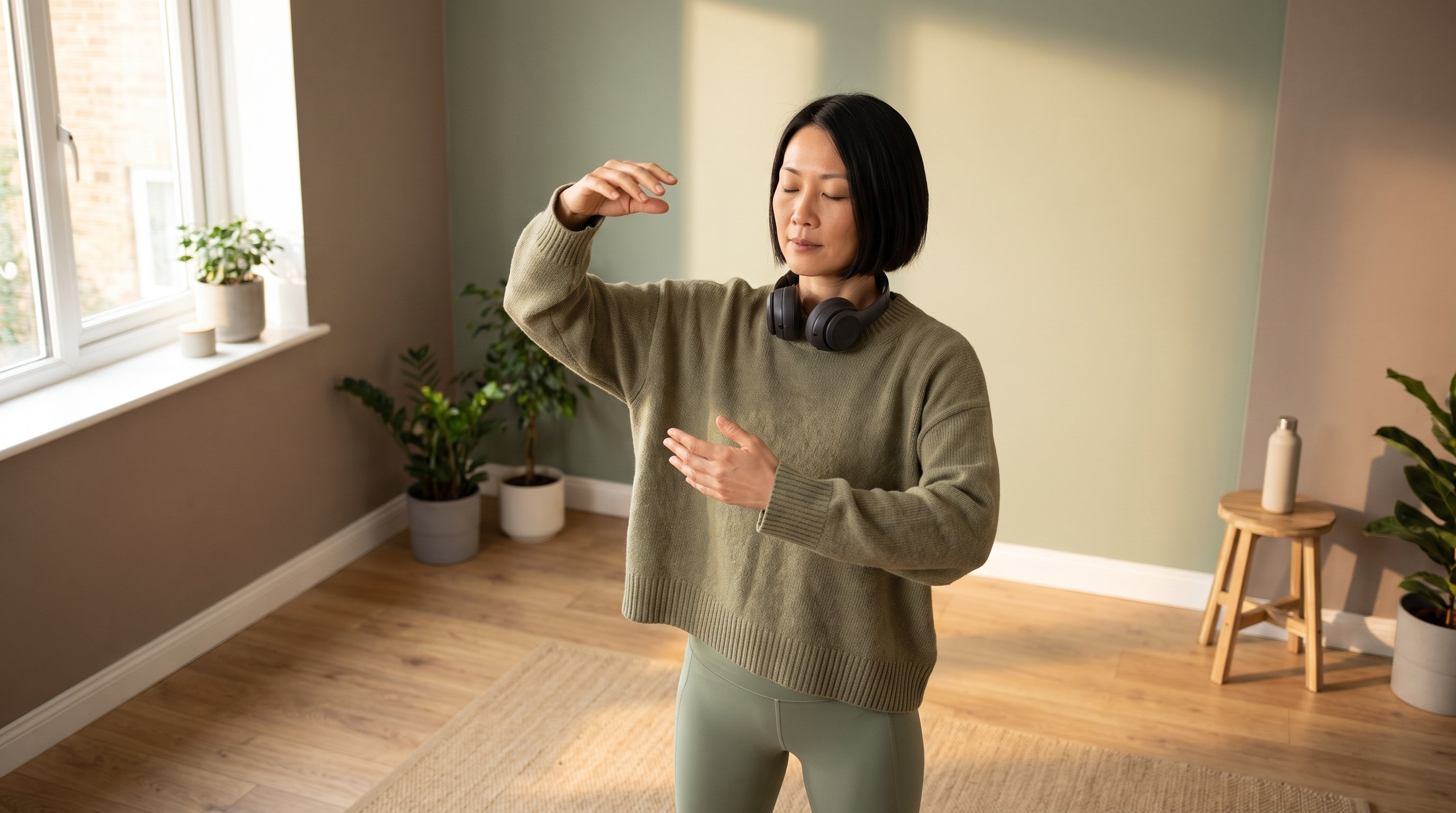
Mornings before the day fills up or evenings after work both work, as long as the slot is the same one every day. Koi Yoga builds a plan around sessions short enough to fit into a lunch break or a gap between meetings, so the habit doesn't depend on finding a big block of free time.
Pairing the sessions with a meal plan built around food you already like removes another decision point, which is often what breaks a routine faster than the movement itself.
A Starter Qigong Plan for Your First Month
The order here matters more than the exact numbers, since building the habit comes before adding volume.
| Stage | Focus | Note |
|---|---|---|
| Week 1 | One short session daily | Keep it under 15 minutes |
| Week 2 | Same session, steadier breath | Notice energy after practice |
| Week 3 | Add a second short session | Different time of day |
| Week 4 | Extend one session slightly | Keep the other short |
When Qigong Starts to Feel Worth It
Expect the first couple of weeks to feel mostly like learning the movements rather than seeing change.
Many people quit around this point simply because nothing dramatic has happened yet, which is normal and not a sign that it isn't working. Energy and sleep tend to shift before the scale does, and that order is worth expecting rather than fighting.
Staying past the point where it still feels unfamiliar is usually what separates people who keep the habit from people who stop.
Where New Qigong Habits Go Wrong
Treating It As a Workout Instead of a Practice
Pushing hard through the movements defeats the point, since the slow pace is what keeps it sustainable daily. Slow the breath down and let the session feel easy rather than exhausting.
Expecting It to Target One Area of the Body
Qigong does not burn fat from a specific spot, and no form of exercise does. Focus on consistency and overall energy balance instead of chasing a particular area.

Skipping Days When the Schedule Gets Busy
Missing one day often turns into missing a week once the routine breaks. Shrink the session instead of skipping it entirely on tight days.
Ignoring What's on the Plate
Movement without attention to eating habits rarely moves the needle on its own. A simple, repeatable meal pattern does more for the deficit than an extra ten minutes of practice.
Comparing Progress to Harder Workout Styles
Qigong isn't trying to be a high-intensity session, so measuring it against one sets the wrong expectation. Judge it by whether you're still doing it in a month, not by how sore you feel the next day.
Making Qigong for Weight Loss Easier to Sustain
Sticking with Qigong long enough to matter usually comes down to structure, not willpower.
Koi Yoga offers a tailored plan built around your fitness level, with hundreds of short guided sessions so you're never guessing what to do next. It pairs the movement with a meal plan, daily habit trackers for steps, water and weight, and challenges designed to keep you showing up when motivation dips.
That combination is the point: the sessions handle the movement side, and the tracking and meal structure handle the eating side, so the deficit stays easy to hold without constant decision-making.
Lose Weight With Qigong
Burn Fat The Gentle Way
Your Next Qigong Session Starts Today
The most useful step is also the smallest one: pick a time today, do one short session, and repeat it tomorrow.
Koi Yoga can take the guesswork out of what to practice and what to eat alongside it, but the habit itself still has to be built one session at a time.
FAQ
Qigong supports weight loss by keeping you moving daily and lowering stress that can drive overeating, not by burning fat on its own. The actual loss still comes from holding a calorie deficit over time.
Gentle doesn't mean ineffective, since the daily consistency it encourages often outlasts harder routines people abandon after a few weeks. A sustainable habit done often tends to beat an intense one done rarely.
Sessions as short as ten to fifteen minutes still count, and fitting one into an existing routine, like after waking up, works better than waiting for free time. Koi Yoga's shorter guided sessions are built for exactly this kind of schedule.
Early weeks are usually about building the habit, and shifts in energy and sleep tend to show up before the scale moves. Staying consistent past this point matters more than judging results too early.
Share this post